 Pin It
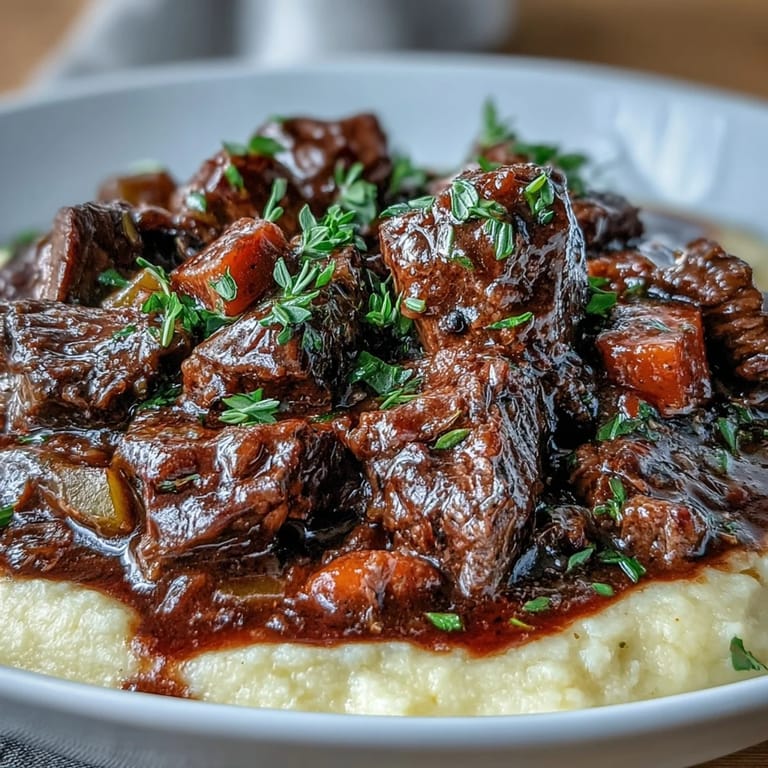
 The snow was falling thick outside when I first made this stew, mostly because I'd been given half a venison haunch and had no idea what to do with it. A neighbor handed me a bottle of homemade sloe gin the same week, and I figured if I was going to experiment, I might as well go all in. The kitchen smelled like a forest floor mixed with something sweet and boozy, and by the time the stew had simmered for two hours, I was completely hooked. It's one of those dishes that feels both wild and comforting at the same time.
I made this for a small dinner party once, and everyone went quiet after the first bite, which is either very good or very bad. Thankfully, it was good. One friend, who swore she didn't like game meat, had two servings and asked for the recipe before she even left. There's something about the way the juniper and sloe gin work together that makes venison taste less gamey and more like something you'd order at a cozy countryside pub.
Ingredients
- Venison shoulder or stewing venison (800 g, cut into 3 cm cubes): This cut has enough fat and connective tissue to become tender with slow cooking, and it won't dry out like leaner cuts tend to do.
- Olive oil (2 tbsp): Used for browning the meat, which is where a lot of the flavor starts, so don't skip this step even if you're in a hurry.
- Onion (1 large, finely chopped): Forms the sweet, savory base of the stew and helps thicken the sauce as it breaks down.
- Carrots (2, sliced): They add a touch of sweetness and hold their shape well, giving the stew some texture.
- Celery (2 stalks, diced): Brings a subtle earthy flavor that balances the richness of the meat and gin.
- Garlic (2 cloves, minced): A little goes a long way here, adding warmth without overpowering the delicate berry notes.
- Tomato paste (2 tbsp): Deepens the color and adds umami, which makes the whole stew taste more rounded.
- Sloe gin (150 ml): This is the star ingredient, lending a tart, fruity sweetness that's nothing like regular gin.
- Beef or game stock (400 ml, gluten-free if needed): Game stock is ideal if you can find it, but good beef stock works just as well.
- Redcurrant jelly (1 tbsp): A little sweetness to balance the acidity and bring out the berry flavors in the gin.
- Bay leaves (2): Essential for that deep, herbal backbone that develops over long cooking.
- Fresh thyme (2 sprigs): Adds a gentle woodsy note that complements the venison beautifully.
- Juniper berries (1 tsp, lightly crushed): These taste like pine and pepper and are traditional with game, so don't leave them out.
- Salt and freshly ground black pepper: Season generously, especially after browning the meat.
- Whole milk (750 ml): Makes the polenta creamy and rich without needing loads of butter.
- Water (250 ml): Thins the milk just enough so the polenta doesn't get too thick too fast.
- Polenta (150 g, quick-cooking or regular): Quick-cooking saves time, but regular polenta has a better texture if you can spare the extra stirring.
- Unsalted butter (40 g): Stirred in at the end to give the polenta a glossy, silky finish.
- Grated Parmesan cheese (50 g): Adds a salty, nutty flavor that makes the polenta feel like more than just a side.
Tired of Takeout? 🥡
Get 10 meals you can make faster than delivery arrives. Seriously.
One email. No spam. Unsubscribe anytime.
Instructions
- Brown the venison:
- Heat the olive oil in a large, heavy-based casserole over medium-high heat and brown the venison cubes in batches, making sure not to crowd the pan. Set the browned meat aside, and don't worry if some bits stick to the bottom, that's flavor waiting to happen.
- Cook the vegetables:
- In the same pan, add the onion, carrots, and celery, cooking for 5 to 7 minutes until softened and starting to color. Stir in the garlic and tomato paste, cooking for another minute until fragrant.
- Deglaze with sloe gin:
- Return the venison to the pan and pour in the sloe gin, letting it bubble for about 2 minutes to reduce slightly. Scrape up all those tasty browned bits from the bottom of the pan as it simmers.
- Add liquids and aromatics:
- Add the stock, redcurrant jelly, bay leaves, thyme, and juniper berries, then season with salt and pepper. Give everything a good stir to combine.
- Simmer the stew:
- Bring to a simmer, cover, and cook gently on low heat for 2 hours, stirring occasionally, until the venison is very tender and the sauce has thickened. The house will smell incredible by this point.
- Prepare the polenta:
- While the stew is cooking, heat the milk and water in a saucepan until just simmering. Gradually whisk in the polenta, stirring constantly to avoid lumps.
- Cook the polenta:
- Cook over low heat, stirring constantly, for 5 to 10 minutes or according to packet instructions until thick and creamy. It should pull away from the sides of the pan when ready.
- Finish the polenta:
- Stir in the butter and Parmesan, then season to taste with salt. Keep it warm until you're ready to serve.
- Serve:
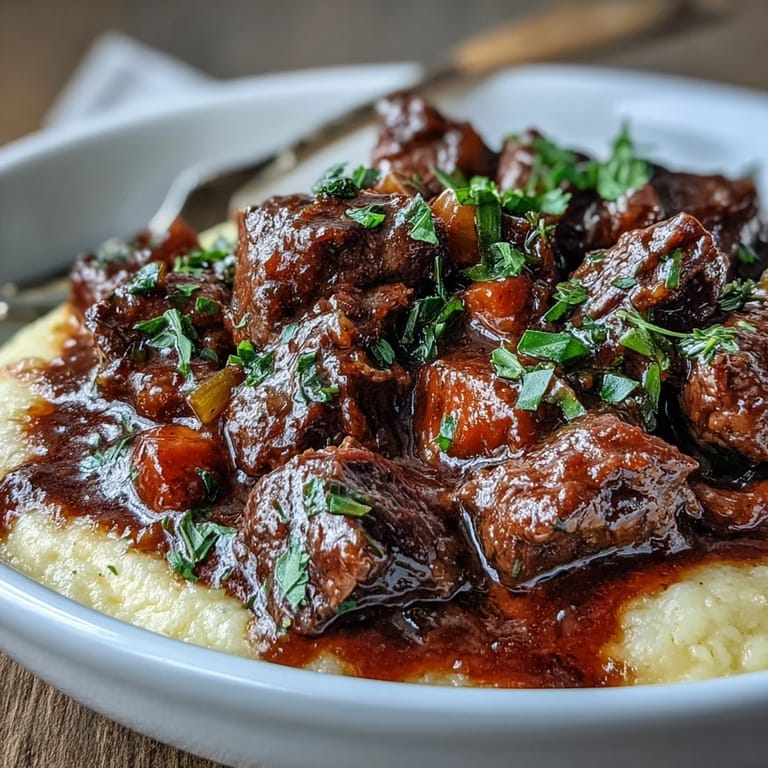
- Remove the bay leaves and thyme sprigs from the stew, then serve the venison hot over creamy polenta. A sprinkle of fresh parsley or thyme on top makes it look as good as it tastes.
 Pin It
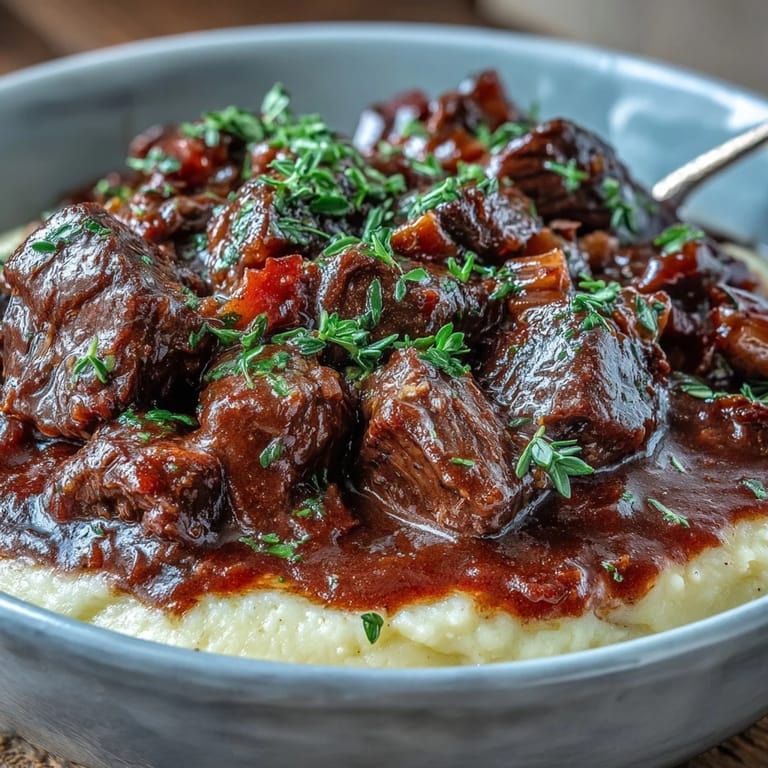
 I'll never forget the first time I served this at a winter gathering and watched people scrape their bowls clean, soaking up every last bit of sauce with the polenta. It's the kind of dish that makes people linger at the table, pouring another glass of wine and talking long after the plates are empty. There's something about slow-cooked game and a hint of wild berries that feels like a celebration of the season.
Choosing Your Venison
Shoulder or stewing cuts are your best friends here because they have enough marbling to stay moist through long cooking. Lean cuts like loin will dry out and get tough, so save those for quick searing. If you can get wild venison, it'll have a stronger flavor, but farmed venison is milder and just as delicious. Ask your butcher to cube it for you if you're short on time, and make sure the pieces are roughly the same size so they cook evenly.
What to Do If You Cant Find Sloe Gin
Sloe gin has a unique tartness, but you're not out of luck if you can't find it. A good-quality port or a berry liqueur like crème de cassis will work, though the flavor will be a bit different. You could also use regular gin with a tablespoon of blackcurrant jam stirred in, which sounds odd but actually works surprisingly well. Red wine is another option, it won't give you the fruity sweetness, but it'll still make a rich, hearty stew.
Making It Ahead and Storing
This stew tastes even better the next day after the flavors have had time to meld, so it's perfect for making ahead. Let it cool completely, then store it in the fridge for up to three days or freeze it for up to three months. Reheat gently on the stove, adding a splash of stock if it's thickened too much. The polenta, on the other hand, doesn't store as well, it firms up and loses its creaminess, so I'd recommend making it fresh when you're ready to serve.
- If reheating polenta, whisk in a little warm milk to loosen it up and bring back the creamy texture.
- Freeze the stew in individual portions for an easy weeknight dinner that feels special.
- Garnish with fresh herbs just before serving to brighten up the rich, deep flavors.
 Pin It
 This is the kind of meal that turns a cold night into something worth looking forward to, and it never fails to impress without feeling fussy. Make it once, and it'll become your go-to when you want to cook something that feels both wild and welcoming.
Recipe Questions & Answers
- → Can I substitute the venison with another meat?
Yes, beef chuck or lamb shoulder work well as alternatives. Maintain the same cooking time for tender results, though beef may need an additional 30 minutes of braising.
- → What can I use instead of sloe gin?
Port, berry liqueur, or a combination of red wine with a tablespoon of blackcurrant jam make excellent substitutes that provide similar fruity depth and richness.
- → Can I make this ahead of time?
Absolutely. The stew actually improves when made a day ahead, allowing flavors to develop fully. Reheat gently and prepare fresh polenta just before serving for best results.
- → How do I prevent the polenta from becoming lumpy?
Pour the polenta in a thin, steady stream while whisking constantly. Maintain low heat and stir frequently throughout cooking to ensure a smooth, creamy consistency.
- → Is this dish suitable for freezing?
The venison stew freezes beautifully for up to 3 months. However, prepare the polenta fresh when serving, as it doesn't freeze well and loses its creamy texture.
- → What wine pairs best with this dish?
Full-bodied reds like Shiraz, Cabernet Sauvignon, or a robust Côtes du Rhône complement the rich game flavors and fruity sloe gin notes perfectly.