 Pin It
 I remember the fog rolling off the river on a Tuesday when I just could not get warm. I reached for the ginger root on the counter and felt its rough texture against my palms. There is something about the way the sharp scent of sliced ginger hits the steam that instantly clears your head. This soup was born from a desperate need for comfort without the heaviness of a cream base. It has since become my go to remedy for chilly bones and quiet evenings.
One evening while the snow piled up against the kitchen window I realized I had no noodles left in the pantry. I worried the broth would feel lonely but the julienned carrots added such a bright crunch that I never looked back. My cat sat by the radiator watching the steam curl up from the pot. We both seemed to find peace in that quiet bubbling sound. It was the first time I understood that simple ingredients often do the heaviest lifting.
Ingredients
- Vegetable Broth: Choose a low sodium version so you can control the saltiness when the miso enters the picture.
- Fresh Ginger: Slicing it thinly allows the heat to infuse the broth without making it overwhelmingly spicy.
- Garlic Cloves: These add a subtle depth that grounds the brighter notes of the ginger.
- Miso Paste: Use white or yellow for a mellow sweetness that complements the vegetables perfectly.
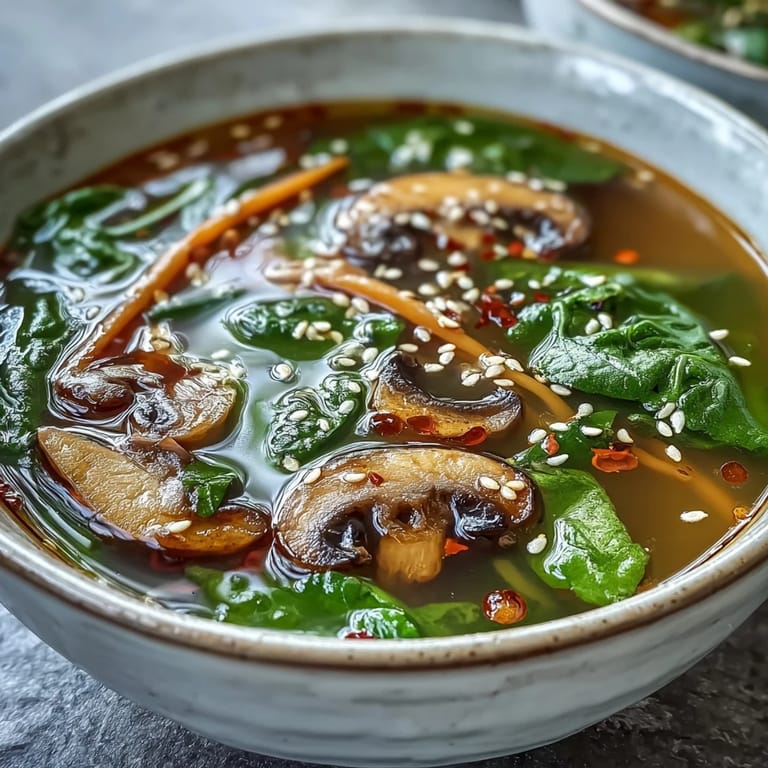
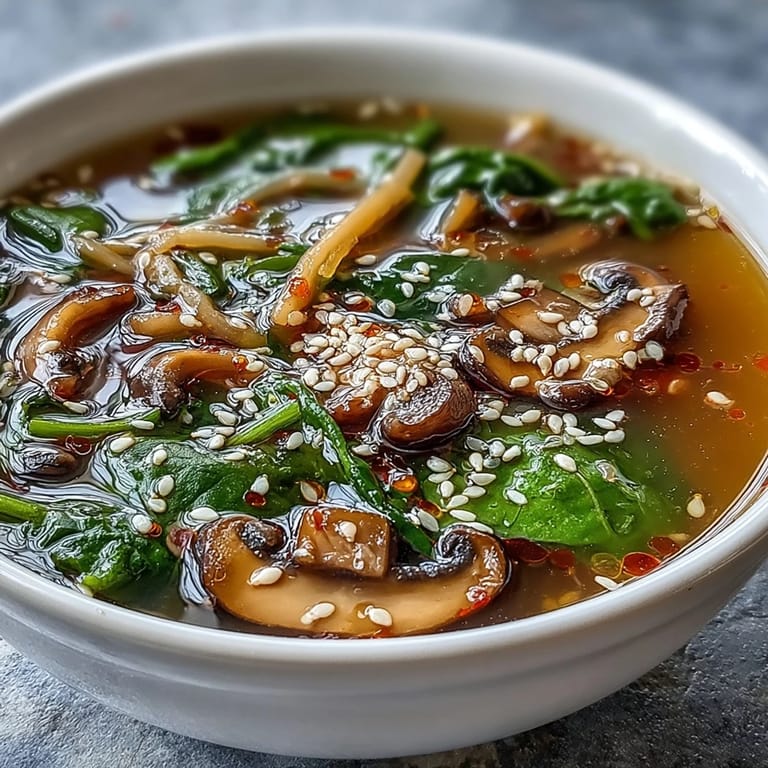
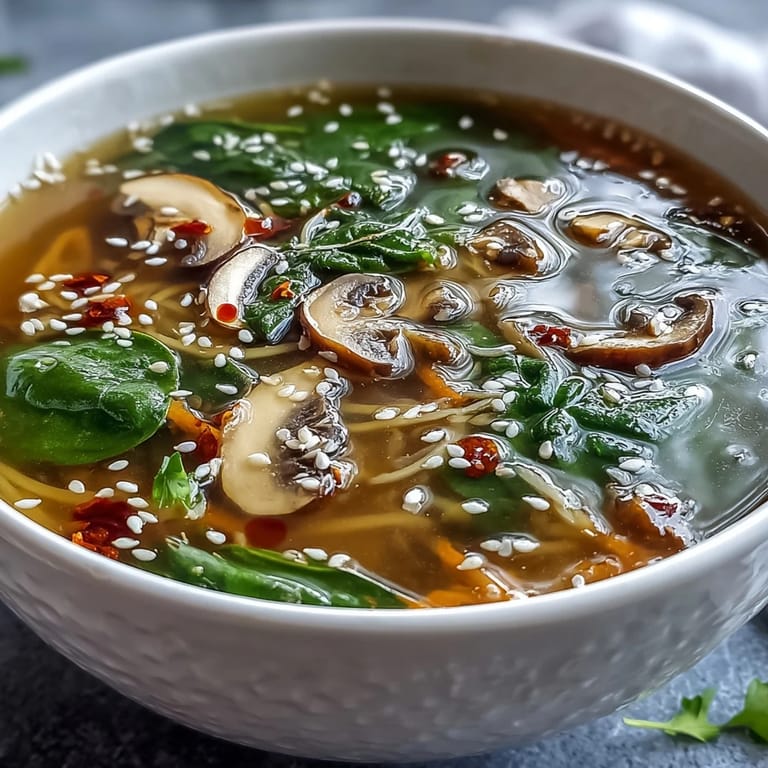
- Shiitake Mushrooms: These provide a meaty texture and an earthy umami flavor that makes the soup feel substantial.
- Baby Spinach: These greens wilt in seconds and add a beautiful pop of color to the bowl.
- Carrots: Cutting them into matchsticks ensures they cook through while keeping a bit of their natural bite.
- Green Onions: These add a fresh sharp finish that cuts through the rich miso.
- Toasted Sesame Seeds: A quick sprinkle adds a nutty aroma that ties all the flavors together.
Tired of Takeout? 🥡
Get 10 meals you can make faster than delivery arrives. Seriously.
One email. No spam. Unsubscribe anytime.
Instructions
- Infuse the Base:
- Bring your broth to a gentle simmer and drop in the ginger and garlic to let them mingle for ten minutes.
- Softening the Roots:
- Toss in your mushrooms and carrots then let them dance in the heat until they are just tender.
- Tempering the Miso:
- Ladle a bit of the warm broth into a small bowl and whisk it with the miso paste until it is completely smooth.
- Combining the Flavors:
- Turn the heat down low and stir the miso mixture back into the main pot to keep the probiotics happy.
- Wilt the Greens:
- Fold in your spinach and green onions and watch as they turn vibrant green in the hot liquid.
- Final Flourish:
- Taste the broth and add a splash of soy sauce or more miso if your palate craves extra depth.
- The Serving Ritual:
- Pour the steaming soup into deep bowls and top it with sesame seeds and a drizzle of chili oil if you want some heat.
 Pin It
 My neighbor once stopped by unannounced while I was finishing a batch and the smell alone convinced her to stay for lunch. We sat at my small wooden table and talked for hours while the soup kept us warm and centered.
Selecting Your Miso
The world of miso can feel intimidating when you are standing in the grocery aisle. I usually stick to white miso for this specific soup because its mildness does not overshadow the fresh ginger. If you find yourself wanting something more robust for a darker winter day try the red variety. It has a longer fermentation time which results in a much saltier and deeper profile.
Hearty Texture Variations
I have found that adding a few cubes of silken tofu makes this feel like a complete meal rather than just a starter. The way the soft tofu absorbs the ginger infused broth is truly a delight. If I am particularly hungry I might boil some soba noodles separately and slide them into the bowl at the very end. This flexibility is what makes the recipe a permanent resident in my kitchen rotation.
Making It Your Own
Do not feel limited by the vegetables listed here because the broth is a canvas for whatever is in your crisper drawer. I once threw in some leftover kale that was looking a bit sad and it worked beautifully. Just remember to adjust your simmering time based on how hardy the greens are.
- Replace the spinach with bok choy for a more traditional texture.
- Add a squeeze of fresh lime at the end to brighten the earthy tones.
- Keep your ginger in the freezer to make it much easier to grate or slice.
 Pin It
 This soup is a gentle reminder that nourishment can be both simple and profound. I hope it brings you as much warmth and clarity as it brings me on a cold afternoon.
Recipe Questions & Answers
- → Can I use different types of miso paste?
White or yellow miso works best for a lighter, sweeter flavor profile. Red miso provides a deeper, more intense taste if you prefer stronger umami notes. Just adjust the quantity to taste.
- → Why shouldn't I boil the soup after adding miso?
High heat destroys beneficial probiotics and enzymes naturally present in fermented miso paste. Keeping the temperature low preserves these gut-healthy properties while allowing the flavors to meld properly.
- → What vegetables can I substitute?
Kale, Swiss chard, or Napa cabbage work well instead of spinach or bok choy. Snow peas, sliced bell peppers, or cubed daikon radish make excellent additions to the vegetable mix.
- → How can I make this more filling?
Add cubed silken tofu during the last few minutes of cooking for extra protein. You can also cook soba or udon noodles separately and ladle the soup over them for a hearty one-bowl meal.
- → Can I make this soup ahead of time?
The broth base can be prepared and refrigerated for up to three days. Add miso and fresh greens just before serving for the best texture and maximum probiotic benefits.