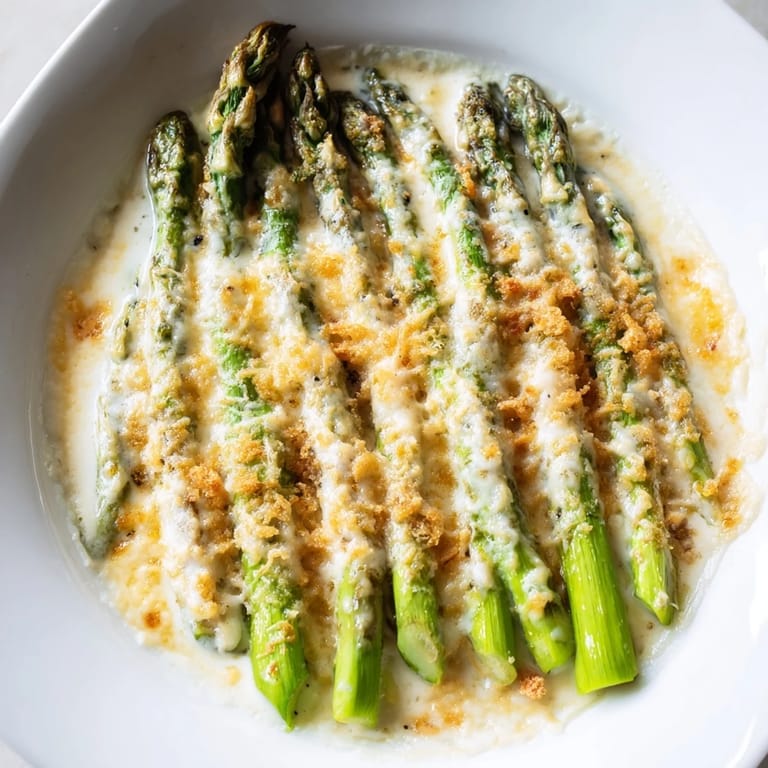
 Pin It
 Last spring, I found myself staring at a bunch of asparagus at the farmers market, thinking about how my grandmother used to make a version of this casserole that nobody ever left on their plate. I hadn't made it in years, but one Sunday when the weather finally turned warm, I decided to recreate it from memory—turns out a creamy sauce, melted cheese, and golden breadcrumbs can bring back a whole kitchen full of people crowded around a table, all reaching for the same spoon.
The first time I made this for company after that farmers market trip, I was nervous about whether the cheese would melt correctly into a smooth sauce or seize up into something grainy and sad. But watching it come together in the saucepan—butter and flour turning into a roux, cream swirling in, the cheese melting into this glossy, pale gold sauce—I realized that mastering this simple technique would unlock so many other dishes I'd been nervous about.
Ingredients
- Fresh asparagus (1 lb): The fresher the better—look for firm, bright green spears that snap cleanly when you bend them, and trim the woody ends by snapping them where they naturally want to break rather than cutting them with a knife.
- Unsalted butter (2 tbsp, plus 1 tbsp melted): Use real butter, not margarine, because it's the foundation of your roux and the flavor that makes people remember this dish.
- All-purpose flour (2 tbsp): This thickens your sauce and needs to be cooked out in the butter for a full minute so it doesn't taste raw.
- Whole milk and heavy cream (1 cup and 1/2 cup): The combination of both gives you richness without being overwhelming; milk alone would be too thin, but all cream would be too heavy.
- Gruyère or Swiss cheese (1 cup, divided): Gruyère melts silkily and has a subtle nuttiness that elevates the whole dish, but Swiss works beautifully too if that's what you have.
- Parmesan cheese (1/4 cup grated): This adds a sharp, salty depth that keeps the sauce from tasting one-note.
- Salt, black pepper, and nutmeg: The nutmeg is optional but trust me—just a quarter teaspoon transforms an ordinary cream sauce into something people can't quite put their finger on.
- Fresh breadcrumbs (1/2 cup) tossed with melted butter: This golden topping is what makes it a casserole and not just baked asparagus in cream sauce; the butter keeps the breadcrumbs from drying out in the oven.
Tired of Takeout? 🥡
Get 10 meals you can make faster than delivery arrives. Seriously.
One email. No spam. Unsubscribe anytime.
Instructions
- Heat your oven and prep your dish:
- Set the oven to 400°F and lightly grease a medium baking dish—I use a 9-by-13-inch, but anything close works fine. This gives the casserole room to bubble and ensures even browning on top.
- Blanch the asparagus until just tender:
- Bring a large pot of salted water to a rolling boil and add the trimmed asparagus, letting it cook for just 2 to 3 minutes until bright green and tender-crisp. The key here is not overcooking; you want the asparagus to still have some resistance when you bite it because it'll soften more in the oven. Drain it well and pat it completely dry with paper towels, then arrange it flat in the baking dish.
- Make your roux and build the sauce base:
- In a medium saucepan, melt the 2 tablespoons of butter over medium heat, stir in the flour, and cook for exactly one minute while stirring—this cooks out the raw flour taste. Gradually whisk in the milk and cream, going slow so there are no lumps, and keep whisking until the sauce thickens to something that coats the back of a spoon, which takes about 3 to 4 minutes.
- Add the cheese and seasonings:
- Remove the pan from heat and stir in half the Gruyère and all the Parmesan, letting them melt into the sauce. Season with salt, pepper, and that optional nutmeg if you're using it, and taste a tiny spoonful to make sure it's seasoned right.
- Assemble the casserole:
- Pour the cheese sauce evenly over the arranged asparagus, then sprinkle the remaining Gruyère across the top. In a small bowl, toss the breadcrumbs with the melted butter until every crumb is coated, then scatter this mixture evenly over the cheese.
- Bake until bubbly and golden:
- Slide the casserole into the preheated oven for 20 to 25 minutes, until the sauce is bubbling around the edges and the breadcrumb topping is a deep golden brown. Let it rest for 5 minutes before serving so the sauce sets up just slightly and you get clean, generous spoonfuls instead of a puddle.
 Pin It
 A few weeks after that first dinner party, a friend called to ask what I'd served that made her nephew, who usually avoids vegetables, eat three big spoonfuls of asparagus. I realized in that moment that this casserole isn't just a recipe—it's one of those dishes that quietly converts people, that proves vegetables can be just as comforting and crave-worthy as anything else on the table.
Why This Casserole Works
The magic is in the contrast: tender asparagus against a silky, cheesy sauce, all finished with a buttery golden crust that gives you a little crunch with every bite. The cream and milk create a sauce that's rich but not heavy, and the blend of Gruyère and Parmesan means you get both smooth melting and sharp, complex flavor. It's the kind of dish that tastes fancier than it actually is, which is exactly why it works for both weeknight dinners and Sunday company.
Variations and Substitutions
Once you master the basic technique, you can play around. Some people stir chopped fresh chives into the breadcrumb topping for a little onion bite, or add a pinch of garlic powder to the sauce itself. If you don't have Gruyère, Swiss works perfectly well, and even sharp cheddar will give you a different but equally delicious result. You can also top the casserole with panko breadcrumbs instead of fresh ones if that's what you have—they'll get crunchier and more golden.
Serving and Storage
Serve this casserole hot, right out of the oven while the cheese is still glossy and the breadcrumbs are at their crunchiest. It pairs beautifully with roasted chicken, baked salmon, or grilled steak, or you can make it the star and serve it as a vegetarian main alongside a simple salad and some crusty bread. Leftovers keep in the refrigerator for up to 3 days and reheat gently in a 325°F oven until warmed through, though the breadcrumb topping won't be quite as crispy the second time.
- You can assemble the casserole completely the night before and bake it the next day—just add 5 minutes to the baking time if it goes straight from the fridge to the oven.
- If you're cooking for someone with a dairy allergy, you can try making the sauce with cashew cream or a high-quality plant-based cream, though the result will be slightly different.
- Frozen asparagus works in a pinch, but thaw it completely and pat it very dry to avoid watering down your sauce.
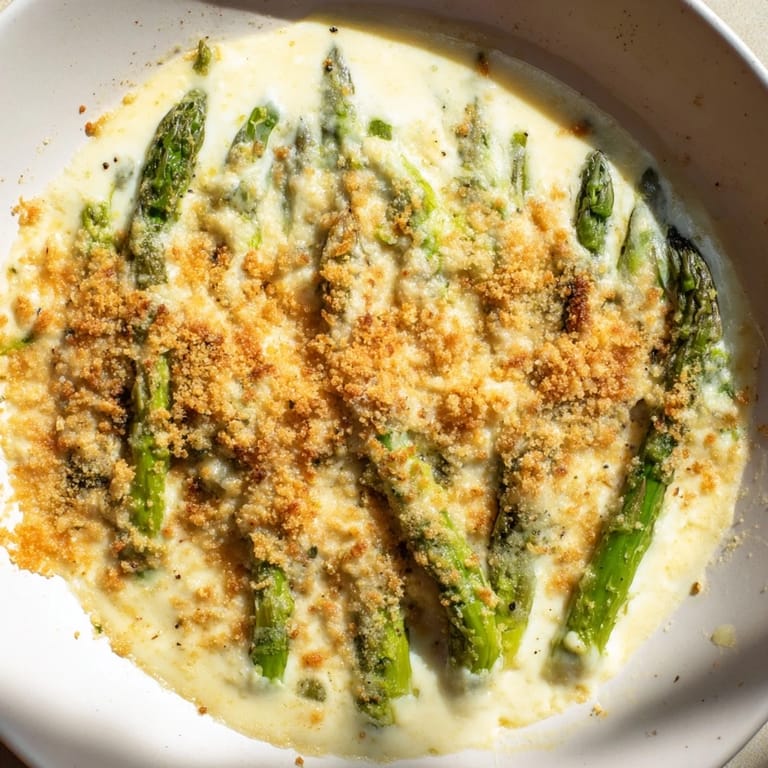 Pin It
 This casserole has become one of those recipes I return to again and again, especially when spring finally arrives and the farmers market is full of fresh asparagus. It's simple enough that I can make it without thinking, but good enough that people always ask for seconds.
Recipe Questions & Answers
- → How do I ensure the asparagus stays tender and crisp?
Blanch the asparagus in boiling salted water for 2–3 minutes, then drain and pat dry before baking to preserve its tender-crisp texture and vibrant color.
- → Can I substitute the cheese used in this dish?
Yes, you can swap Gruyère with mozzarella or cheddar to adjust the flavor while maintaining the creamy texture.
- → What is the purpose of the breadcrumb topping?
The buttery breadcrumbs add a crunchy, golden crust that contrasts nicely with the creamy sauce and tender asparagus beneath.
- → Is it necessary to use both milk and heavy cream?
The combination balances richness and sauce thickness, creating a smooth, luscious coating for the asparagus.
- → Can I add extra seasoning to enhance flavor?
Yes, incorporating garlic powder into the sauce or mixing chopped chives into the topping can elevate the flavor profile.