 Pin It
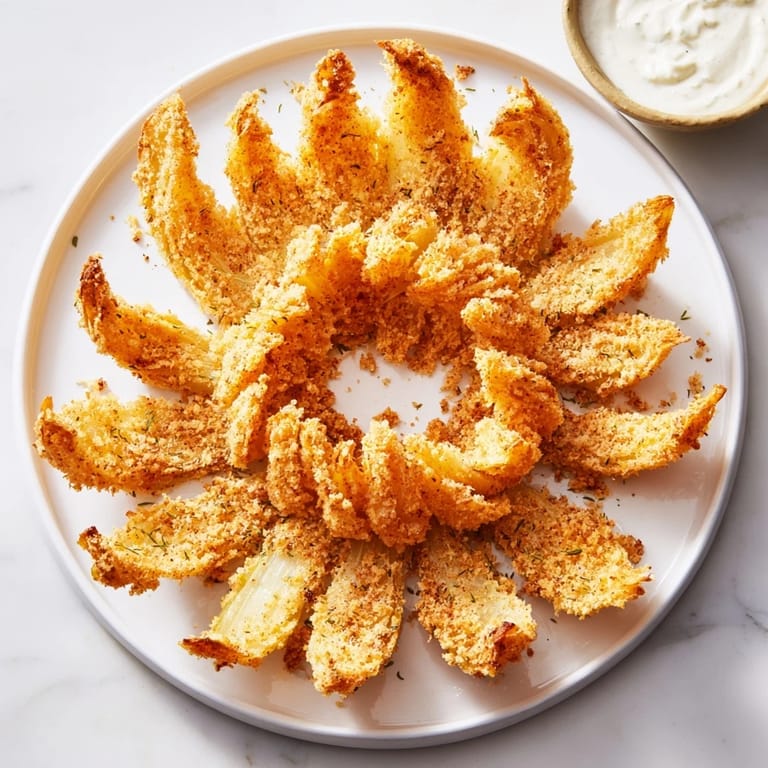
 The first time I made a blooming onion at home, I was trying to recreate that magical moment at a restaurant when the server sets down this golden, steaming flower and everyone at the table leans in at once. My kitchen filled with that incredible aroma of frying onion and spices, and suddenly it clicked—this wasn't fancy restaurant magic, just a big onion, some technique, and hot oil. Now it's the dish I make when I want to impress without spending hours in the kitchen.
I remember making this for a game night crowd that was definitely expecting just chips and dip, and the reactions when I pulled the whole blooming onion out of the fryer were completely worth the minor oil splatter on my sleeve. One friend actually said, 'You made this?' like I'd just performed actual magic, and I let him believe it was harder than it was.
Ingredients
- 1 large sweet onion (such as Vidalia): The sweetness matters here—regular yellow onions can be too sharp and will make your layers bitter as they fry, so don't skip the upgrade.
- 2 1/2 cups all-purpose flour: This is your structural base; it needs to be seasoned generously or your coating will taste flat.
- 2 teaspoons paprika, 1 teaspoon garlic powder, 1 teaspoon dried oregano, 1 teaspoon salt, 1/2 teaspoon black pepper, 1/2 teaspoon cayenne: These spices are what make people ask for your recipe—don't reduce them thinking it's too much.
- 2 large eggs and 1 cup whole milk: The egg wash is your adhesive; the milk thins it just enough so it flows between those tight petals.
- Vegetable oil, for frying: You'll need at least 3 inches in your pot, and it absolutely must hit 375°F or the onion absorbs oil instead of crisping.
- For the sauce—1/2 cup mayonnaise, 2 tablespoons sour cream, 1 tablespoon ketchup, 1 teaspoon prepared horseradish, 1/2 teaspoon smoked paprika, 1/2 teaspoon garlic powder, 1/4 teaspoon cayenne, salt and pepper: Mix this ahead and let it chill; the flavors bloom together and it becomes something special.
Tired of Takeout? 🥡
Get 10 meals you can make faster than delivery arrives. Seriously.
One email. No spam. Unsubscribe anytime.
Instructions
- Make the sauce first:
- Whisk together mayonnaise, sour cream, ketchup, horseradish, smoked paprika, garlic powder, cayenne, and season with salt and pepper. Cover and let it sit in the fridge while you prep—this is your safety net, your backup plan, your thing that's already done.
- Prepare your onion canvas:
- Peel the onion completely, then slice off about 1/2 inch from the top stem end, keeping the root intact as your anchor. Place it cut-side down and, starting 1/2 inch from the root, make careful downward cuts all around the onion to create 12 to 16 sections (think petals), being mindful not to slice through that root. Flip it gently and coax those petals apart like you're opening a flower—don't force it.
- Build your dry coating station:
- In one bowl, whisk together flour, paprika, garlic powder, oregano, salt, black pepper, and cayenne. In another bowl, beat eggs with milk until combined.
- Double dredge for crispy glory:
- Take your onion, dunk it into the flour mixture, coating every single surface and working the seasoned flour between those petals with your fingers—this is the moment where care pays off. Shake off the excess gently. Now dip the whole thing into the egg mixture, making sure it seeps between the layers. A final coat in the flour mixture, pressing lightly to help it stick, and shake off excess again.
- Heat your oil to the right temperature:
- Pour at least 3 inches of vegetable oil into a deep pot or fryer and bring it to 375°F using a thermometer—guessing here leads to disappointment. This temperature is your contract with crispiness.
- Fry with confidence:
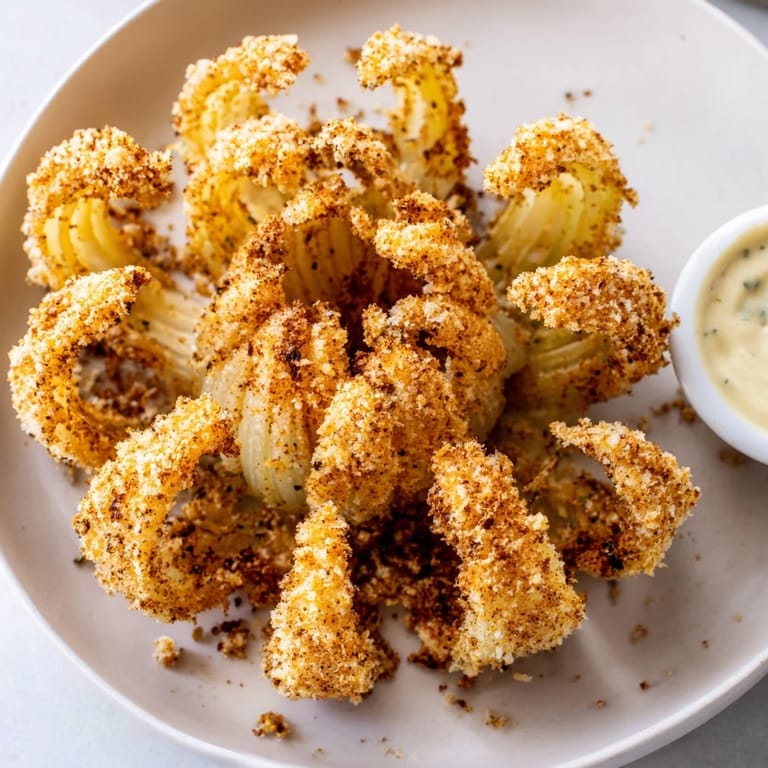
- Using a slotted spoon or spider, lower the onion cut-side down into the hot oil. Let it fry for 6 to 8 minutes, turning gently halfway through, until every petal is golden brown and crispy at the edges. The whole kitchen will smell incredible.
- Rest and season:
- Transfer to paper towels and sprinkle lightly with salt while it's still hot. This is when it's most receptive to seasoning and most beautiful.
- Serve the moment it cools slightly:
- Plate it with that chilled sauce in a small bowl and watch people's faces as they realize they're about to eat this whole thing.
 Pin It
 There was this one time I pulled a blooming onion out too early and the petals were still slightly firm in the middle—nobody minded, they just ate faster. It taught me that even slightly imperfect blooming onions are still showstoppers, and that sometimes the best food moments are the ones where you're not quite perfect but you tried.
Why the Dipping Sauce Changes Everything
The sauce isn't just an afterthought—it's the reason this dish transcends being just fried onion. That balance of creamy mayo, sharp horseradish, and smoked paprika creates something tangy and rich that cuts through the richness of the fried coating. I've learned that a mediocre blooming onion with an incredible sauce beats a perfect onion with ketchup any day.
The Timing That Matters
Blooming onions don't wait—they're best eaten within 5 or 10 minutes of coming out of the oil, while the petals are still crispy and the heat is still working magic on the layers inside. I've tried making them an hour ahead for a party and then reheating, and it's just not the same. The joy of this dish is partially in the drama of it being fresh right now.
Small Tricks That Actually Work
After making this a handful of times, I've picked up little habits that make the whole process smoother. The most useful one is having all your stations set up before you even peel the onion—dry mix in a bowl, egg wash in another, paper towels standing by. Moving fast once you start dredging means a better final coat and less time for flour to get soggy.
- If your onion starts falling apart while frying, a spider strainer with a handle (not just a slotted spoon) gives you more control and confidence.
- Add a pinch of cornstarch to your flour mixture if you want extra crispiness—it fries up even crunchier.
- Use an instant-read thermometer for the oil; it's the single best investment for consistent results.
 Pin It
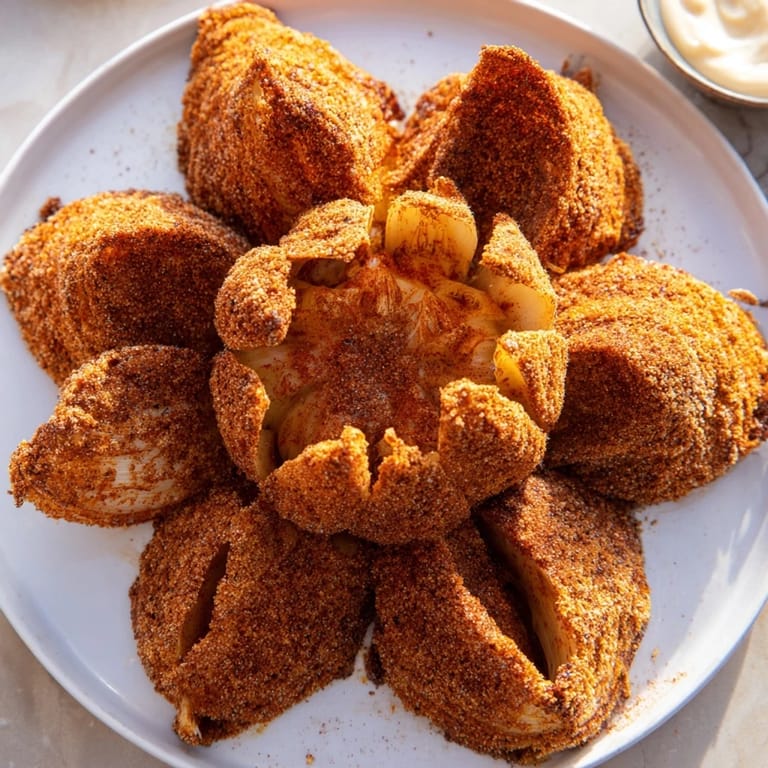
 Making a blooming onion is one of those dishes that proves you don't need a restaurant kitchen or years of training to create something that stops people mid-conversation. It's crispy, golden, a little bit theatrical, and honestly just delicious.
Recipe Questions & Answers
- → How do you prepare the onion for frying?
The onion is trimmed at the top, then cut downward into 12-16 petals while keeping the root intact to hold the segments together.
- → What ingredients are used in the batter coating?
The batter consists of all-purpose flour seasoned with paprika, garlic powder, oregano, salt, black pepper, and cayenne, combined with eggs and whole milk.
- → How is extra crispiness achieved during frying?
The onion is dipped in the flour mixture, then egg mixture, and again in flour before frying, creating a double coating for maximum crunch.
- → What is in the creamy dipping sauce?
The sauce blends mayonnaise, sour cream, ketchup, prepared horseradish, smoked paprika, garlic powder, cayenne pepper, salt, and black pepper for a zesty finish.
- → What oil temperature is ideal for frying?
Heat the oil to 375°F (190°C) to ensure the onion fries quickly and takes on a golden, crispy texture without absorbing excess oil.