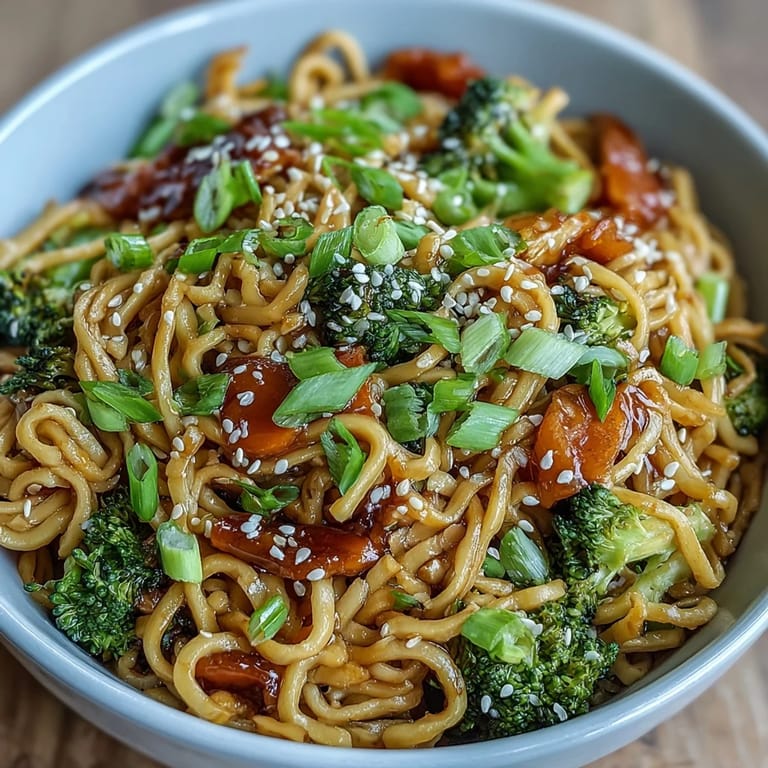
 Pin It
 There's something about the sizzle of noodles hitting a hot wok that instantly transports me back to a rainy Tuesday when my roommate stumbled home craving takeout but we had nothing but pantry staples. I started throwing together what I had—some egg noodles, a handful of vegetables, and a sauce that came together almost by accident—and somehow created something we couldn't stop eating. That bowl sparked a kitchen obsession that's stuck with me ever since.
I made this for a potluck once where I showed up fashionably late with a giant bowl of these noodles still steaming, and it disappeared before anything else on the table. My friend Sarah asked for the recipe three times during that evening alone, and now she texts me photos of her versions with little tweaks she's added—sometimes with crispy shallots, sometimes with a splash of sriracha. That's when I realized this bowl had become more than just dinner; it was a bridge between what I loved cooking and what people loved eating.
Ingredients
- Egg noodles (300 g): These have a tender bite that soaks up the sauce better than dried noodles, though you can substitute rice or wheat noodles if you prefer.
- Broccoli florets (2 cups): The key is cutting them small enough to feel substantial but uniform so they cook evenly without falling apart.
- Carrots, julienned (2 medium): Thin strips cook quickly and add a natural sweetness that balances the savory sauce beautifully.
- Green onions, sliced (2): Save some slices for garnish—they brighten the final bowl and add a fresh onion snap.
- Soy sauce (1/4 cup): This is your umami backbone, so don't skimp on quality here.
- Mirin (2 tbsp): If you can't find it, dry sherry works in a pinch, though the flavor shifts slightly toward earthiness.
- Honey or maple syrup (2 tbsp): Honey gives a rounder sweetness while maple adds subtle complexity.
- Rice vinegar (1 tbsp): This cuts through the richness and keeps the sauce from feeling cloying.
- Brown sugar (1 tbsp): A little extra sweetness that dissolves instantly and adds body.
- Sesame oil (2 tsp): Use toasted sesame oil for deeper flavor, and measure carefully—a little goes a long way.
- Garlic and ginger (2 cloves and 1 tsp): Fresh is non-negotiable; they brighten everything and prevent the sauce from tasting flat.
- Cornstarch slurry (1 tbsp cornstarch mixed with 2 tbsp water): This is your thickener, and whisking it smoothly before adding prevents lumps from forming.
- Toasted sesame seeds (2 tbsp): Toasting them yourself takes thirty seconds and makes them taste exponentially better than the pre-toasted kind.
Tired of Takeout? 🥡
Get 10 meals you can make faster than delivery arrives. Seriously.
One email. No spam. Unsubscribe anytime.
Instructions
- Boil the noodles until they're just tender:
- Fill a pot with water and bring it to a rolling boil, then add the noodles and cook according to package timing—usually around 4 to 5 minutes. You want them cooked through but still with a slight firmness when you bite them, not mushy. Drain them in a colander, then rinse under cold water so they stop cooking and won't clump together.
- Steam your vegetables until they're crisp-tender:
- Bring a pot of water with a steamer basket to a simmer, add your broccoli and carrots, and let them steam for 2 to 3 minutes—the goal is to keep them bright and snappy, not soft. You want to bite through them and hear a little crunch, which also creates a nice textural contrast against the soft noodles.
- Build the sauce slowly so it comes together smoothly:
- In a small saucepan, combine your soy sauce, mirin, honey, rice vinegar, brown sugar, sesame oil, minced garlic, and grated ginger over medium heat. Stir occasionally and let it come to a gentle simmer—you'll notice the sauce becoming glossy and the garlic releasing its aroma into your kitchen. When it's simmering gently, whisk your cornstarch slurry one more time, then pour it in slowly while stirring constantly to avoid lumps, and watch as the sauce transforms into something silky and coat-worthy.
- Toss everything together until it's coated and hot:
- In a large wok or skillet, combine your drained noodles, steamed vegetables, sliced green onions, and that beautiful teriyaki sauce you just made. Toss continuously over medium-high heat for about 1 to 2 minutes, making sure every strand of noodle gets kissed by the sauce and everything reaches a nice serving temperature.
- Finish with garnish for flavor and texture:
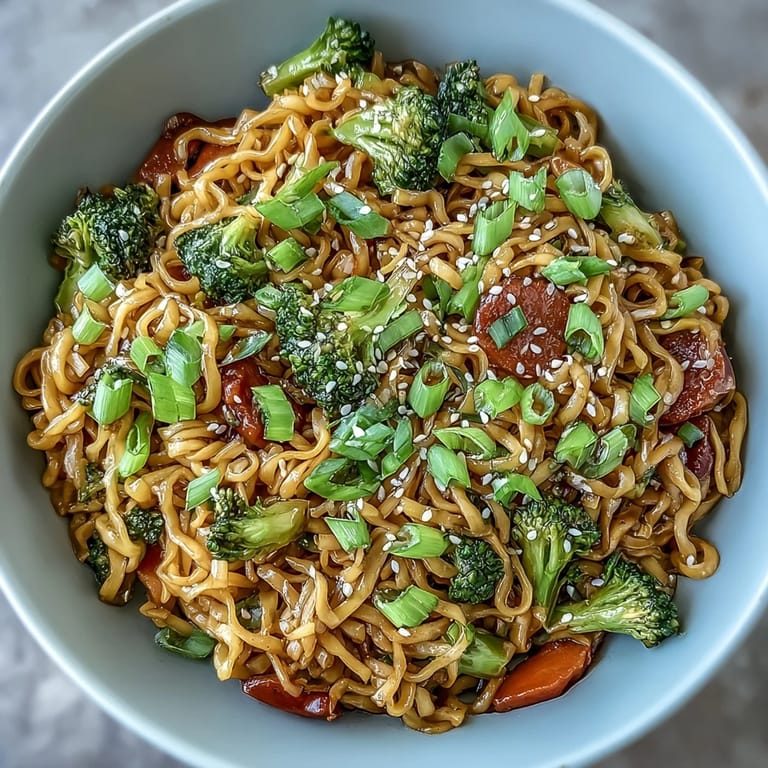
- Divide the noodles into bowls and immediately sprinkle with toasted sesame seeds and the reserved green onion slices while everything is still hot. The heat will open up the sesame flavor and the green onion will stay slightly crunchy, giving you layers of texture and taste in every spoonful.
 Pin It
 There was a moment during a late night cooking session when I realized I'd been standing at the stove with the most genuine smile on my face, just watching steam rise from this bowl of noodles I'd created. It wasn't about impressing anyone or proving something—it was simply about the satisfaction of taking ordinary ingredients and making something that tasted extraordinary. That's what this recipe does every single time.
The Secret to Sauce That Clings
Most people make teriyaki sauce too thin, which means it just pools at the bottom of your bowl instead of coating every noodle. The cornstarch slurry is what transforms it from a loose glaze into something almost velvet-like that refuses to slide off. I learned this the hard way after my first attempt, when I watched my carefully built flavors separate and abandon the noodles. Now I make sure that slurry is completely smooth before it meets the hot sauce, and I stir constantly while it thickens—usually takes only a minute or two before you can see the difference.
Why Fresh Ginger and Garlic Actually Matter Here
Powdered versions will make this taste like a generic stir-fry sauce, and you'll lose that bright, sharp quality that wakes up your palate. Fresh ginger releases this clean, almost peppery heat that cuts through the sweetness beautifully, while fresh garlic becomes almost mellow and sweet when simmered in the sauce instead of harsh. I used to think it was pretentious to care about this difference, until I tasted them side by side and realized how drastically one changes everything.
Customization Without Losing Your Way
The beauty of this bowl is that it welcomes additions without falling apart—I've added crispy tofu, grilled chicken, a soft-boiled egg, even roasted mushrooms, and every version felt right. The sauce is forgiving enough to coat whatever protein you add, and the vegetables provide enough structure that you can play around without the dish becoming chaotic. Just remember that more protein might mean slightly thicker sauce, so you can always make the cornstarch slurry a touch thicker if needed.
- For a vegan version, swap egg noodles for rice or wheat noodles and use maple syrup instead of honey without changing anything else.
- A squeeze of fresh lime juice right before serving adds brightness that makes everything taste fresher and more alive.
- If you make this ahead, store the sauce separately and toss with the noodles just before serving so everything stays crisp and doesn't get soggy.
 Pin It
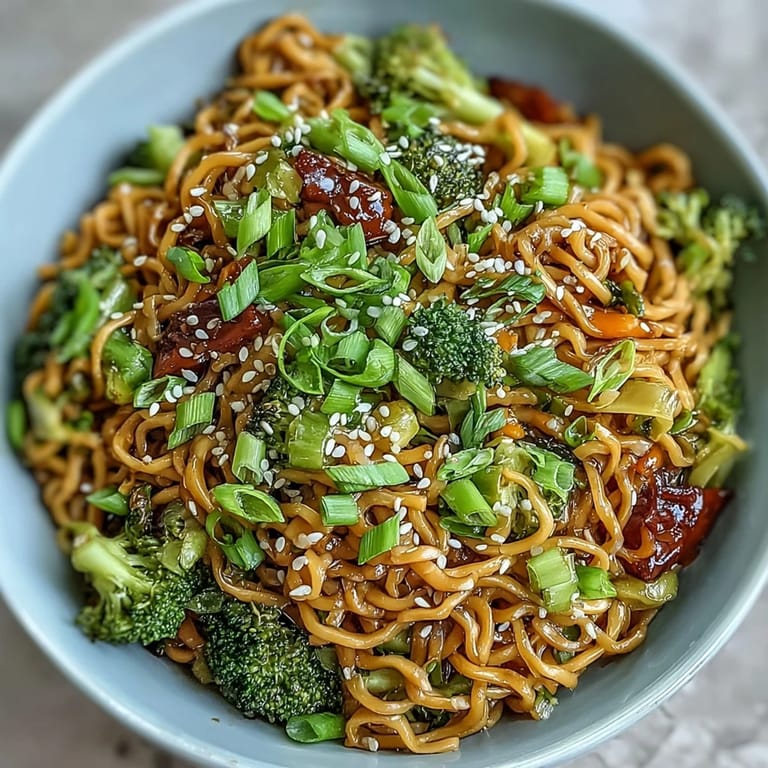
 Every time I make this, I'm reminded that the best meals aren't complicated—they're just thoughtful combinations of good ingredients treated with a little care. This bowl has saved countless dinner nights and turned ordinary evenings into something worth remembering.
Recipe Questions & Answers
- → What noodles work best for this dish?
Egg noodles provide a tender texture and absorb the teriyaki sauce well, but wheat or rice noodles can be used for vegan options.
- → How can I keep the vegetables crisp?
Steam or blanch broccoli and carrots briefly (2-3 minutes) to retain their crunch and bright color.
- → Can the sweetness be adjusted?
Yes, adjust honey or maple syrup amounts to balance sweetness according to taste preferences.
- → Is it necessary to make a cornstarch slurry?
The cornstarch slurry thickens the sauce, providing a glossy texture that clings well to noodles and vegetables.
- → What proteins pair well with this dish?
Tofu, tempeh, or grilled chicken are great additions for added protein and complement the teriyaki flavors nicely.