 Pin It
 The first time I watched my hands move through a cloud of steam, tossing strands of spaghetti with nothing but cheese and pepper, I thought I'd done something wrong. The sauce looked broken, clumpy, almost grainy. Then my roommate's Italian grandmother leaned over my shoulder, added a splash more pasta water, and told me to keep moving my wrist like I meant it. Suddenly, everything came together into something glossy and alive. That's when I learned that cacio e pepe isn't really about following steps, it's about understanding the conversation between starch, fat, and heat.
I made this for a friend who'd just moved into her first apartment with an empty fridge and a single pot. We stood in her tiny kitchen, steam fogging up the window, and she kept asking if we were really making dinner out of pasta, cheese, and pepper. When she took her first bite, she went quiet for a moment, then looked at me like I'd just taught her a magic trick. That night, with mismatched plates and cheap wine, cacio e pepe became her signature dish. Sometimes the simplest recipes are the ones that stick with people the longest.
Ingredients
- Spaghetti (400 g): The long strands are traditional and grab onto the sauce beautifully, but I've learned that whatever pasta shape you have will work as long as you save enough starchy cooking water.
- Pecorino Romano cheese (120 g, finely grated): This is the soul of the dish, salty and sharp with a slight funk that Parmesan can't replicate, and it must be freshly grated or it won't melt into that silky emulsion.
- Freshly cracked black pepper (2 tsp, plus extra): Toasting it in the pan wakes up oils you didn't know were there, turning simple pepper into something almost floral and deeply warming.
- Salt: For the pasta water only, and go generous because this is your only chance to season the pasta itself from the inside out.
Tired of Takeout? 🥡
Get 10 meals you can make faster than delivery arrives. Seriously.
One email. No spam. Unsubscribe anytime.
Instructions
- Boil the Pasta:
- Bring a large pot of well salted water to a rolling boil and add the spaghetti, stirring occasionally so nothing sticks. Before draining, scoop out at least a full cup of that cloudy, starchy water because it's the secret ingredient that will make your sauce cling and shine.
- Toast the Pepper:
- While the pasta cooks, add your black pepper to a large dry skillet over low heat and let it sizzle gently for a minute or two until you can smell it across the room. This step transforms the pepper from sharp to complex, adding a layer of warmth that makes the whole dish hum.
- Build the Base:
- Pour about half a cup of the hot reserved pasta water into the skillet with the toasted pepper and let it simmer together briefly. You're creating a peppery broth that will help the cheese melt smoothly instead of seizing up into rubbery clumps.
- Toss the Pasta:
- Add the drained spaghetti directly into the skillet and toss it around with tongs so every strand gets coated in that fragrant, peppery liquid. The pasta should look glossy and almost loose, not dry or sticky.
- Add the Cheese:
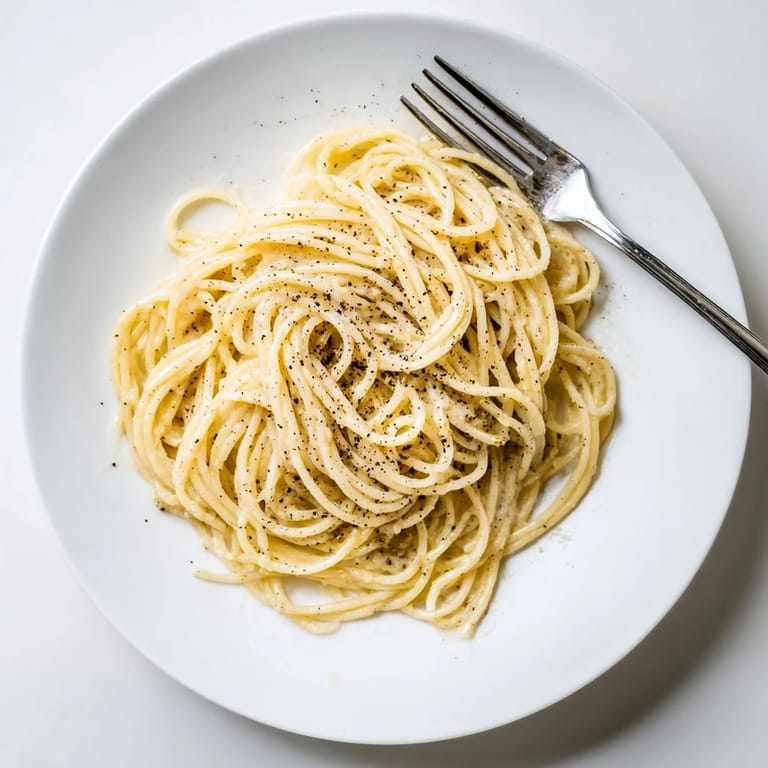
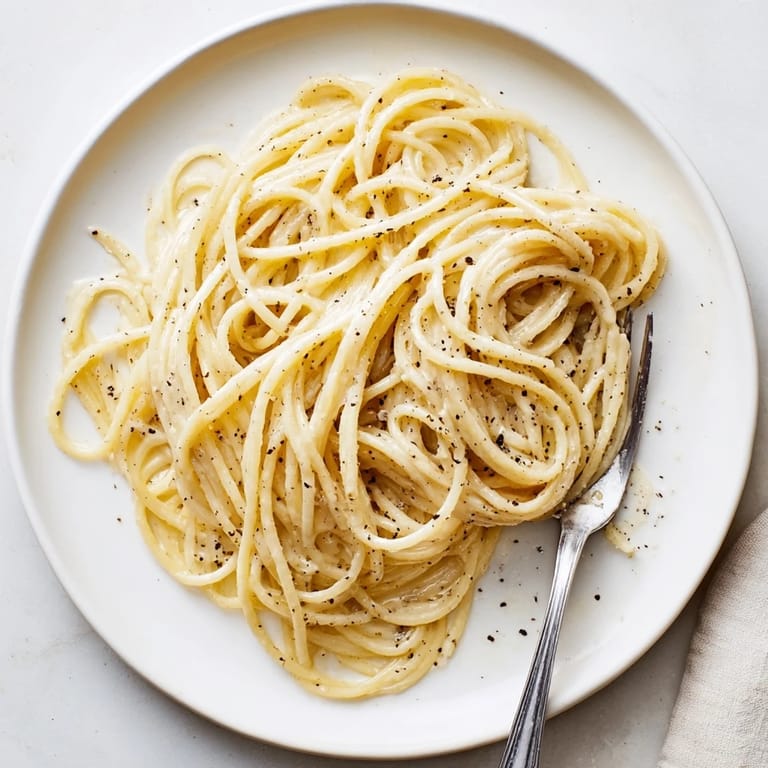
- Turn the heat to the lowest setting and sprinkle in the grated Pecorino a handful at a time, tossing constantly and vigorously like you're trying to convince the cheese to melt rather than clump. Add splashes of reserved pasta water whenever things start to look tight or grainy, and keep moving everything until you have a creamy, flowing sauce that clings to each strand.
- Serve Immediately:
- Divide the pasta among warm bowls and finish with an extra shower of Pecorino and a few more cracks of black pepper. Cacio e pepe waits for no one, so eat it while it's still steaming and at its silkiest.
 Pin It
 One winter evening, I made this after a long, frustrating day, and the ritual of grating cheese and cracking pepper by hand pulled me back into my body. There's something grounding about a recipe that asks you to pay attention, to move with intention, to notice when the sauce is just about to come together. By the time I sat down to eat, I wasn't just fed, I was calm. That's when I realized cacio e pepe isn't just dinner, it's a kind of edible meditation.
Choosing Your Cheese
Pecorino Romano is traditional for a reason, its sharp saltiness and slight tanginess are what give cacio e pepe its backbone. I've tried making this with Parmigiano Reggiano when I've run out of Pecorino, and while it's still delicious, it tastes softer and sweeter, less bold. If you do swap, use a mix of half Pecorino and half Parmesan to keep some of that punchy character. Whatever you choose, grate it yourself because pre grated cheese has anti caking agents that prevent it from melting into a smooth, creamy sauce.
Getting the Sauce Right
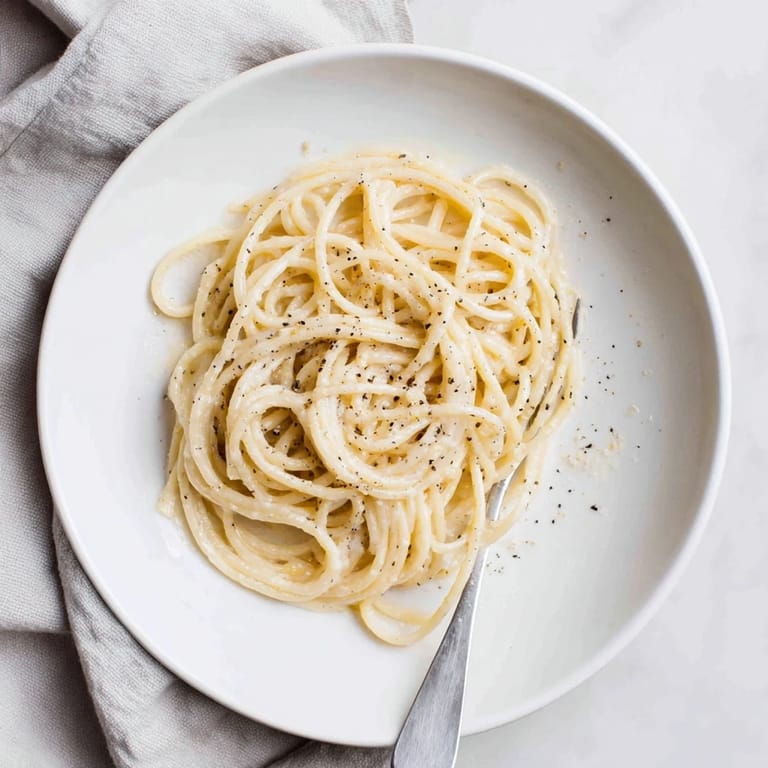
The key to a silky sauce is temperature control and constant movement. If the pan is too hot, the cheese will seize and turn stringy or grainy. If you're not tossing enough, the fat will separate and pool instead of emulsifying. I learned to turn the heat off entirely before adding the cheese, then toss everything together off the burner, using just the residual heat and the hot pasta water to coax the cheese into melting. It feels less intuitive at first, but once you get the rhythm, it becomes second nature.
Pairing and Serving Suggestions
Cacio e pepe is rich and bold enough to stand alone, but I love serving it with a simple arugula salad dressed in lemon and olive oil to cut through the richness. A crisp white wine like Vermentino or a dry Pinot Grigio mirrors the sharpness of the Pecorino without competing with it. If you want to make it a full meal, add some roasted vegetables on the side, or keep it traditional and let the pasta be the star.
- Serve in warmed bowls so the sauce stays creamy longer and doesn't congeal as it cools.
- Have extra grated cheese and a pepper mill at the table because everyone will want more.
- Leftovers don't reheat well, so this is best made fresh and eaten immediately while the magic is still alive.
 Pin It
 Once you make this a few times, you'll start to feel it in your hands, the way the sauce comes together, the exact moment it goes from broken to beautiful. It's one of those recipes that teaches you to trust yourself in the kitchen, and that confidence spills over into everything else you cook.
Recipe Questions & Answers
- → Why is my sauce becoming grainy or clumpy?
Grainy sauce typically occurs when cheese is added too quickly or over high heat, causing the proteins to seize. Add cheese gradually while tossing vigorously, maintain low heat, and work quickly. Using freshly grated Pecorino Romano rather than pre-grated ensures better melting and emulsification.
- → Can I make this with Parmigiano Reggiano instead?
Yes, Parmigiano Reggiano is an excellent substitute and will produce a milder, slightly less salty flavor. The texture and creaminess remain similar. Adjust seasoning to taste as Parmigiano is less intense than Pecorino Romano.
- → What type of black pepper should I use?
Freshly cracked black pepper is essential for authentic flavor. Crack peppercorns just before cooking to release their oils and maximize aroma. Pre-ground pepper loses potency quickly and won't deliver the same bold, peppery punch that defines this dish.
- → How do I achieve the perfect creamy sauce consistency?
The sauce comes from emulsifying starchy pasta water with melted cheese. Add reserved pasta water gradually while tossing constantly. The starch in the water helps bind the cheese to the pasta. If too thick, add more pasta water; if too thin, toss longer to help emulsification.
- → Can I prepare this ahead of time?
This dish must be served immediately after combining the pasta with sauce. The emulsion breaks down quickly once assembled. You can cook the pasta and prepare ingredients in advance, but combine everything just before serving for best results.
- → What wine pairs well with this pasta?
Crisp, dry white wines complement the rich, peppery flavors beautifully. Vermentino and Pinot Grigio are excellent choices. The wine's acidity cuts through the cheese's richness and cleanses the palate between bites, enhancing the overall dining experience.