 Pin It
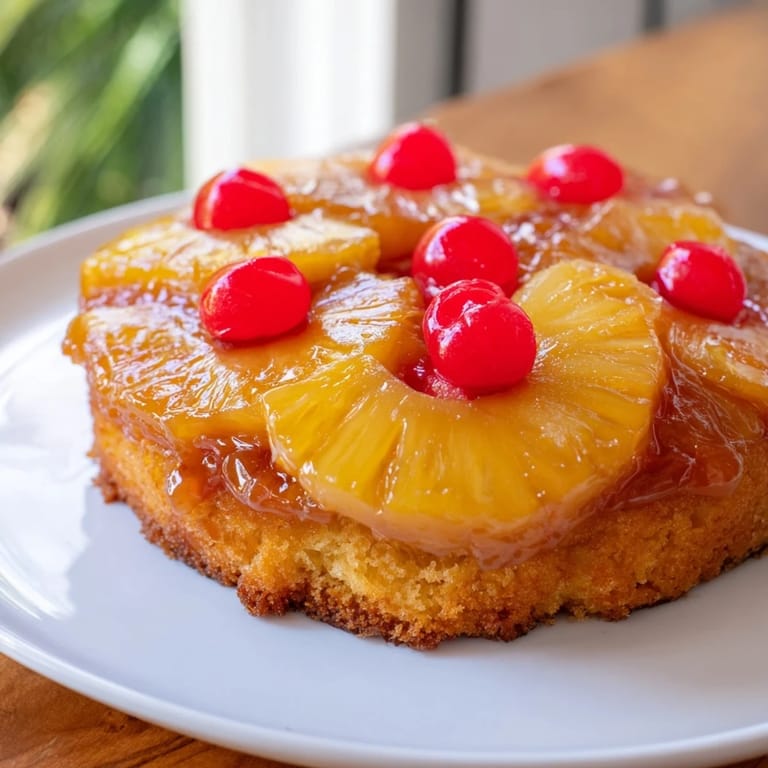
 My grandmother's kitchen always smelled like butter and brown sugar on Sunday afternoons, and somewhere in those memories lives this pineapple upside-down cake. There's something magical about watching a golden cake flip onto a plate to reveal those glistening caramelized rings—it feels like a small miracle every single time. The first time I made it alone, I was terrified the whole thing would stick to the pan, but that moment when it released perfectly onto the plate? That's when I understood why she loved this recipe so much.
I brought this cake to a potluck years ago, and my coworker took one bite and immediately closed her eyes like she'd been transported somewhere. She asked for the recipe that same day, and now her daughter makes it for every family gathering. That's when I realized this cake does something beyond tasting good—it creates moments people actually remember.
Ingredients
- Unsalted butter (for topping): This melts into the brown sugar to create the glossy caramel layer, so don't skip it or substitute with oil.
- Light brown sugar: The molasses gives this topping its deep, almost butterscotch flavor that plain white sugar can't achieve.
- Canned pineapple rings: They're drained and predictable, which means the topping won't get watery during baking.
- Maraschino cherries: Yes, they're a bit kitschy, but they add that classic retro touch and peek through the cake beautifully when inverted.
- Softened butter (for batter): This should be at room temperature so it creams properly with the sugar, creating a light, tender crumb.
- Granulated sugar: This sweetens the cake itself without competing with the caramel topping.
- Eggs: They bind everything and help the cake rise gently in the oven.
- Vanilla extract: A teaspoon sounds small, but it's what makes people wonder what's making this taste so familiar and comforting.
- All-purpose flour: Measure it by spooning into your measuring cup and leveling off, not scooping directly from the bag.
- Baking powder: This lifts the cake just enough so it stays tender, not dense.
- Salt: This tiny amount brings out all the other flavors and balances the sweetness.
- Whole milk: The fat content keeps the crumb moist and prevents a dry, crumbly texture.
Tired of Takeout? 🥡
Get 10 meals you can make faster than delivery arrives. Seriously.
One email. No spam. Unsubscribe anytime.
Instructions
- Set the stage:
- Preheat your oven to 175°C (350°F) and grease your 23-cm round cake pan thoroughly. This is your blank canvas.
- Create the caramel layer:
- Melt 60 g butter and pour it evenly into the bottom of your pan, then scatter the brown sugar over it in an even layer. Don't worry if it looks lumpy—it'll melt and smooth out as the cake bakes.
- Arrange the fruit:
- Place the pineapple rings in a single layer over the sugar, then nestle a cherry in the center of each ring. This is the part where it starts to look like something special.
- Cream the base:
- In a mixing bowl, beat the softened butter and granulated sugar together until it's pale, fluffy, and light—this takes about 2-3 minutes with an electric mixer. This is where the tender crumb starts to happen.
- Add the eggs:
- Beat in each egg one at a time, waiting for it to fully combine before adding the next. Then stir in the vanilla extract.
- Dry ingredients ready:
- In a separate bowl, whisk together the flour, baking powder, and salt so everything is evenly distributed.
- Build the batter:
- Add the flour mixture to the butter mixture in three additions, alternating with the milk and starting and ending with flour—this prevents overworking the batter and keeps the cake tender. Stir just until combined; small lumps are okay.
- Top with care:
- Spoon the batter evenly over the pineapple rings and smooth the top gently with a spatula. The batter will be thick and creamy, and it should spread without tearing the fruit underneath.
- Bake to golden:
- Bake for 38-42 minutes, or until a toothpick inserted into the center comes out clean and the top is deep golden brown. The edges might pull away slightly from the pan when it's done.
- The big flip:
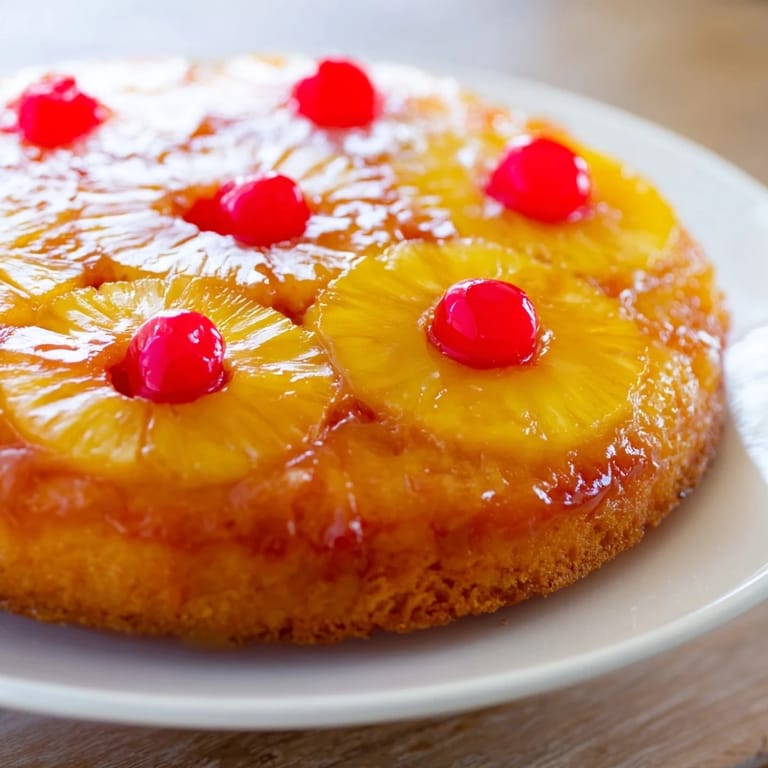
- Let the cake cool in the pan for exactly 10 minutes—this is crucial because it gives the cake time to set but keeps the topping soft enough to stick to the cake. Run a sharp knife around the edges to loosen it, then place a serving plate on top and flip it over in one confident motion.
 Pin It
 There's a moment when you flip this cake and hold your breath, waiting to see if the topping has stayed true. That moment—when golden caramel and jewel-bright fruit reveal themselves—is pure kitchen joy. It's the reason I've made this cake so many times now that I could probably do it with my eyes closed.
The Magic of Inverted Cakes
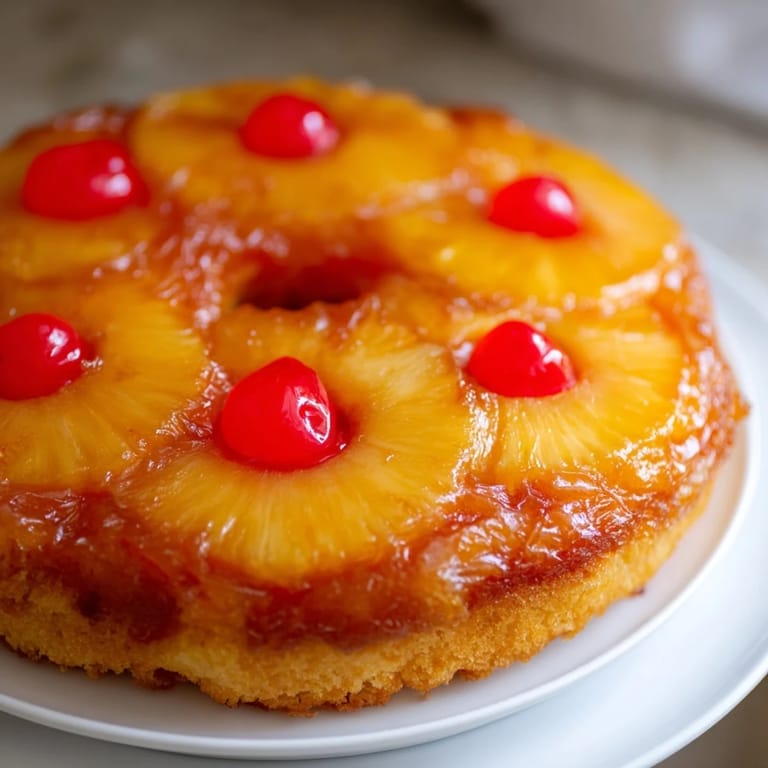
Upside-down baking is all about trust and timing. The topping bakes on the bottom, away from direct heat, so it caramelizes gently without burning while the cake rises above it. When you flip it, you're revealing the prettiest part of the work—the part that was hidden the whole time. It's theatrical without being fussy, which is exactly why this cake has stayed popular since the 1920s.
Serving and Storage
This cake is best served warm or at room temperature, which gives the caramel topping time to set into a glossy finish but still taste soft and sticky. A generous scoop of vanilla ice cream or a dollop of whipped cream will melt into all those beautiful caramel layers and make it even more special. Store any leftover cake covered in the refrigerator for up to three days, and warm it gently before serving if you want that fresh-from-the-oven feeling again.
When You Want to Make It Your Own
This classic recipe is sturdy enough to handle a few personal touches. Fresh pineapple works beautifully if you drain it well and pat it dry so excess moisture doesn't seep into the topping. A tablespoon or two of pineapple juice mixed into the batter adds a subtle tropical note that no one can quite identify but everyone loves. You can swap the cherries for toasted pecans or almonds for a nuttier twist, or skip them entirely and let the caramelized pineapple be the star.
- Add a splash of dark rum or coconut extract to the batter for a grown-up version.
- Arrange the pineapple rings in a pattern—concentric circles or a spiral—for extra visual appeal.
- Let the cake come to room temperature before serving if you want cleaner slices, though warm cake will taste richer.
 Pin It
 This cake has taught me that sometimes the most memorable desserts are the simple ones, made with good ingredients and a little bit of intention. Make it for someone you want to impress, or make it just for yourself on a quiet afternoon.
Recipe Questions & Answers
- → What type of pineapple is best for topping?
Canned pineapple rings are commonly used for ease and consistent sweetness, but fresh pineapple can be substituted for a fresher flavor.
- → How do I prevent the cake from sticking to the pan?
Grease the pan thoroughly before adding butter and sugar, ensuring a smooth release when flipping the cake after baking.
- → Can I use a different fruit instead of cherries?
Yes, pecans or other nuts offer a lovely contrast, or consider fresh berries if preferred.
- → What is the best way to serve this cake?
Serve warm or at room temperature, optionally accompanied by whipped cream or vanilla ice cream to enhance the flavors.
- → Is there a way to add extra moisture to the batter?
Adding 1–2 tablespoons of pineapple juice into the batter can increase moisture and deepen the fruit flavor.