 Pin It
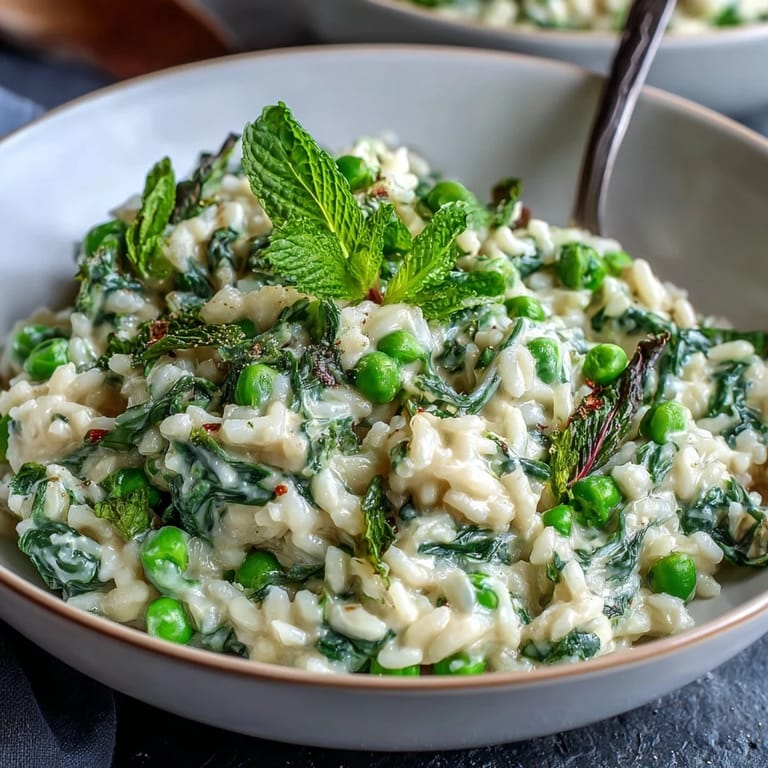
 My neighbor knocked on my kitchen window one April afternoon with a colander overflowing with fresh peas from her garden, and I suddenly understood why spring cooking feels different. That evening, I stirred together this risotto while she sat at my counter telling stories, and by the time the mint hit the pan, the whole kitchen smelled like a promise kept. It became our thing after that—every April, the peas, the risotto, the window visits.
The first time I made this for a dinner party, I was terrified—risotto has a reputation for being fussy. But once I started the constant stirring, something meditative took over, and by the time my guests arrived, I was calmer than I'd been all week. They asked for the recipe before dessert, which felt like winning.
Ingredients
- Fresh or frozen green peas (1 cup): Fresh peas in season taste like nothing else, but frozen ones work beautifully—add them late so they stay bright and tender instead of turning dull.
- Arborio rice (1 1/2 cups): This short-grain rice releases starch as it cooks, creating that signature creamy texture without any cream at all.
- Vegetable stock (4 cups): Keep it warm in a separate pot so each ladle-full doesn't shock the rice and interrupt the cooking process.
- Dry white wine (1/2 cup): The acidity brightens everything and prevents the risotto from tasting heavy or dull.
- Unsalted butter (3 tbsp divided): Butter at the start coats the rice, and more at the finish makes it lusciously creamy—this is where the magic happens.
- Freshly grated Parmesan (1/2 cup plus extra): Grate it fresh right before cooking because pre-grated has anti-caking agents that prevent it from melting smoothly into the risotto.
- Fresh mint leaves (1/4 cup): Mint is the soul of this dish—tear or chop it just before stirring in so it stays vibrant and fragrant.
- Lemon zest: This adds brightness that makes people pause and ask what that subtle something is.
Tired of Takeout? 🥡
Get 10 meals you can make faster than delivery arrives. Seriously.
One email. No spam. Unsubscribe anytime.
Instructions
- Start with butter and aromatics:
- Melt 2 tablespoons butter over medium heat and add your finely chopped onion, letting it soften and turn translucent over about 4 minutes—this is your flavor foundation. Add minced garlic and cook just 1 minute more so it perfumes the butter without burning.
- Toast the rice:
- Stir the Arborio rice into the butter and onion mixture, letting it cook and coat for about 2 minutes until the grains look slightly opaque and smell nutty. This toasting step prevents the rice from becoming gluey later.
- Deglaze with wine:
- Pour in your dry white wine and stir constantly until it's mostly absorbed into the rice, which happens quicker than you'd think. You'll hear the sizzle soften as the liquid disappears.
- Add stock gradually:
- Add warm vegetable stock one ladle-full at a time, stirring often and waiting until most of the liquid is absorbed before adding more—this patient process takes about 18 to 20 minutes. You'll watch the rice go from separate grains to something increasingly creamy and tender.
- Fold in the peas:
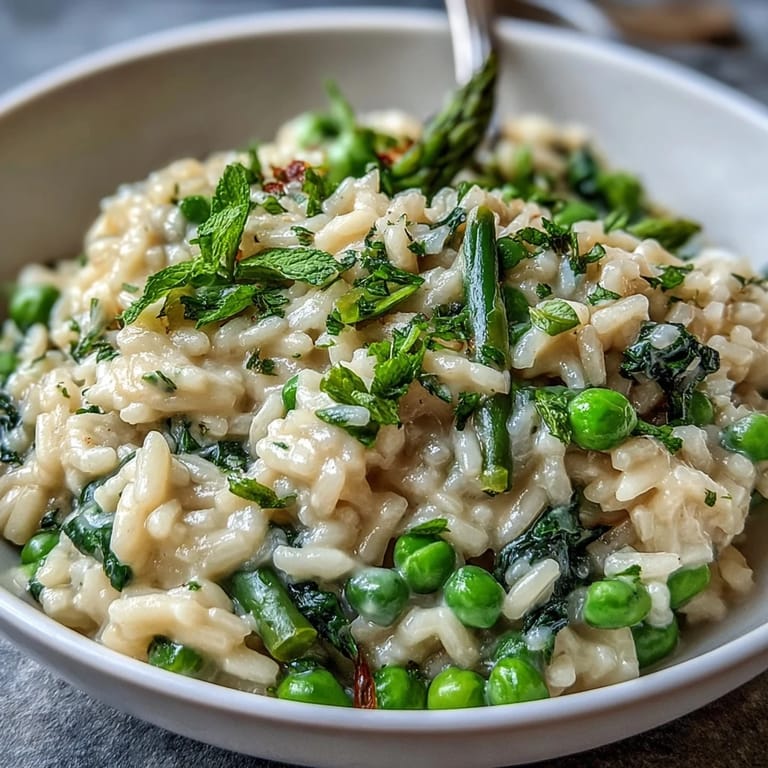
- During the final 5 minutes of cooking, stir in your peas so they warm through and stay bright green instead of turning khaki-colored. Their sweetness becomes part of the dish rather than lost in it.
- Finish and rest:
- Remove from heat and stir in the remaining butter, freshly grated Parmesan, chopped mint, lemon zest, and a good pinch of salt and pepper until everything is creamy and well combined. Taste and adjust seasoning—risotto is forgiving and wants your judgment.
- Serve immediately:
- Spoon into bowls right away because risotto waits for no one, and top each portion with extra Parmesan and a few fresh mint leaves. The warmth brings out the fragrance of the mint.
 Pin It
 I've learned that risotto teaches you something about presence. There's no rushing it, no phone scrolling while you stir, and that forced attention somehow makes the food taste like care. When you eat it, you taste those twenty minutes of focus, and so does everyone else.
Why This Dish Celebrates Spring
Every ingredient here speaks to April and May—peas fresh from the garden or just-thawed from the freezer, bright mint that's just started growing again, the zing of lemon zest that cuts through the richness. It's the kind of dish that tastes like the season has turned, like something new is finally possible after winter.
The Stirring Rhythm
There's something almost musical about making risotto if you let yourself notice it. The scrape of the wooden spoon against the pan becomes a rhythm, the sizzle softens as each ladle of stock absorbs, the rice slowly transforms from individual grains to something unified and creamy. I've found that people who claim they can't cook suddenly succeed at risotto because the constant attention forces them to slow down and actually taste and feel what's happening.
Pairing and Serving Tips
This risotto pairs beautifully with a crisp white wine like Sauvignon Blanc or Pinot Grigio—the acidity echoes the lemon in the dish and cleanses your palate between bites. Serve it as the main course with a simple green salad on the side and perhaps some good bread to soak up the creamy goodness left on the plate. If you want to get fancy, a drizzle of excellent olive oil over each bowl adds a whisper of fruitiness that makes people wonder what that subtle richness is.
- Make sure your Parmesan is truly fresh-grated, not the pre-grated kind that won't melt smoothly.
- If you're cooking for vegetarians, double-check that your Parmesan is rennet-free if that matters to your guests.
- Leftover risotto can be chilled and transformed into risotto cakes the next day, though it's honestly best enjoyed fresh and warm.
 Pin It
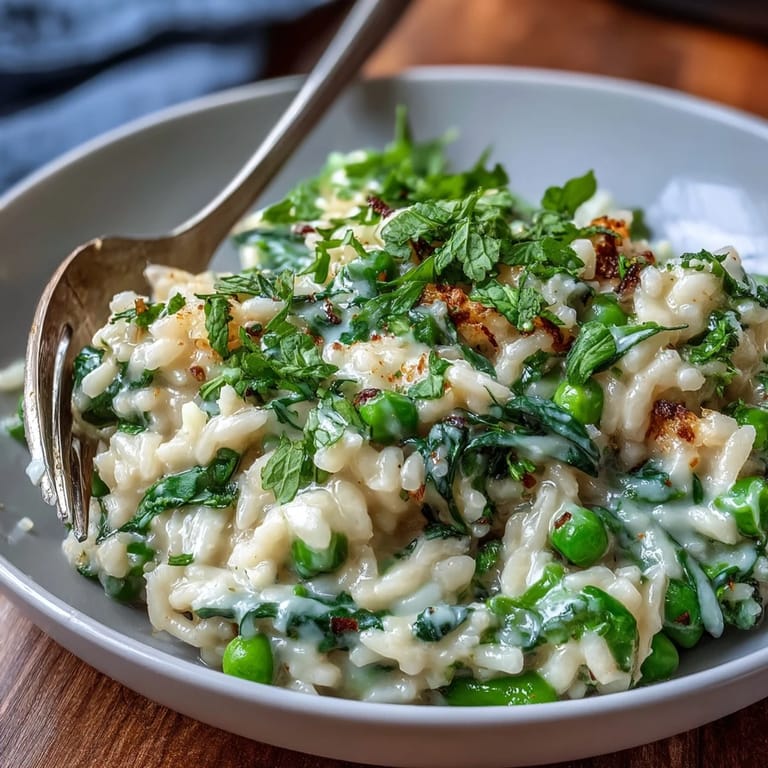
 This risotto has become my go-to when I want to cook something that feels both simple and special, the kind of meal that reminds people why they love gathering around a table. Make it with attention, taste as you go, and trust that the rice knows what to do.
Recipe Questions & Answers
- → How can I keep the peas bright and tender?
Stir peas in during the last 5 minutes of cooking to retain their vibrant color and tender texture.
- → What is the best way to achieve creamy risotto texture?
Gradually add warm vegetable stock to toasted Arborio rice, stirring constantly to release starch and create a creamy consistency.
- → Can I use frozen peas instead of fresh ones?
Yes, frozen peas work well as a convenient substitute without compromising flavor or texture.
- → Is white wine necessary for this dish?
White wine adds depth and acidity; however, you can substitute with extra vegetable stock if preferred.
- → How can I enhance the richness of the risotto?
Finish with a knob of butter and a drizzle of good-quality olive oil for extra creaminess and flavor.