 Pin It
 My grandmother kept a single recipe card stained with oil and cocoa—not for carrot cake, but it was watching her layer cakes with such care that made me realize desserts aren't just about sweetness. Years later, a friend brought a slice of carrot cake to a picnic on a humid summer afternoon, and I tasted something I'd been missing: spice, moisture, and that unexpected brightness from crushed pineapple that made the whole thing feel alive. I went home and started experimenting, learning that the secret wasn't in doing anything fancy, just in respecting each ingredient and letting them speak together. This cake became my version of that ritual—something you make when you want people to feel welcomed.
I made this for my neighbor who'd just moved in, not because I'm that kind of person, but because she mentioned offhand that she'd had a rough week. Watching her face when she tasted it—that moment when someone realizes you put actual thought into something for them—that's when I stopped seeing this as just another cake and started seeing it as a conversation.
Ingredients
- All-purpose flour (2 cups / 250 g): The foundation—weigh it if you can, as it's more forgiving than volume measurements.
- Ground cinnamon, nutmeg, and ginger (2 tsp, 1/2 tsp, 1/2 tsp): Toast these spices briefly in a dry pan before measuring if you have time; it wakes them up and deepens their warmth.
- Baking powder and baking soda (1 1/2 tsp and 1 tsp): These work together to give the cake lift and a tender crumb—don't skip either one.
- Granulated and brown sugar (1 cup and 1/2 cup): The brown sugar adds moisture and a subtle molasses note that makes everything more interesting.
- Vegetable oil (1 cup / 240 ml): Oil, not butter, keeps this cake tender and prevents it from drying out even after days.
- Eggs (4 large): Add them one at a time and beat well after each—this creates an emulsion that carries all the moisture.
- Grated carrots (2 cups / 220 g): Squeeze gently to remove excess moisture before folding in, or your batter will be too wet.
- Chopped nuts (1 cup / 100 g): Walnuts or pecans work equally well; toast them first if you want a deeper, richer taste.
- Crushed pineapple (1 cup / 140 g): Drain it thoroughly in a fine sieve—this is non-negotiable or your cake becomes soggy.
- Cream cheese and butter for frosting (8 oz and 1/2 cup): Both must be genuinely softened, not cold, or your frosting will be lumpy and stressful to make.
Tired of Takeout? 🥡
Get 10 meals you can make faster than delivery arrives. Seriously.
One email. No spam. Unsubscribe anytime.
Instructions
- Prepare your pans and preheat:
- Set your oven to 350°F and grease two 9-inch round pans—use parchment paper if you have it, as it makes turning out the layers almost foolproof. This small step saves frustration later.
- Build your dry mixture:
- Whisk together flour, cinnamon, nutmeg, ginger, baking powder, baking soda, and salt in one bowl, making sure everything is evenly distributed so no bite lacks spice. Set it aside and don't overthink this part.
- Cream sugar and oil:
- In a larger bowl, beat granulated sugar, brown sugar, and oil together until they look pale and slightly fluffy, about 2–3 minutes. This creates the base that'll hold everything together.
- Incorporate eggs gently:
- Add eggs one at a time, beating well after each addition so they fully incorporate and create an emulsion. Stir in vanilla extract and breathe—you're almost there.
- Combine wet and dry:
- Pour the dry ingredients into the wet mixture and stir just until combined; overmixing toughens the cake, so stop the moment you don't see streaks of flour. This is where patience pays off.
- Fold in the good stuff:
- Gently fold in grated carrots, nuts, well-drained pineapple, and raisins if using, until they're evenly distributed throughout. The folding motion—scraping from bottom to top—keeps the batter light.
- Divide and bake:
- Pour batter evenly between your prepared pans and smooth the tops lightly with a spatula. Bake for 35–40 minutes, checking at 35 with a toothpick—it should come out clean or with just a few moist crumbs clinging to it.
- Cool with intention:
- Let the cakes sit in their pans for 10 minutes (this helps them release cleanly), then turn them out onto a wire rack to cool completely. Frosting a warm cake is an exercise in chaos, so really do wait until they're fully cool.
- Make the frosting:
- Beat softened cream cheese and butter until smooth, then gradually add sifted powdered sugar, vanilla, and salt, beating until light and fluffy—this takes about 3–4 minutes and feels transformative. Taste it and adjust vanilla if you'd like.
- Assemble the cake:
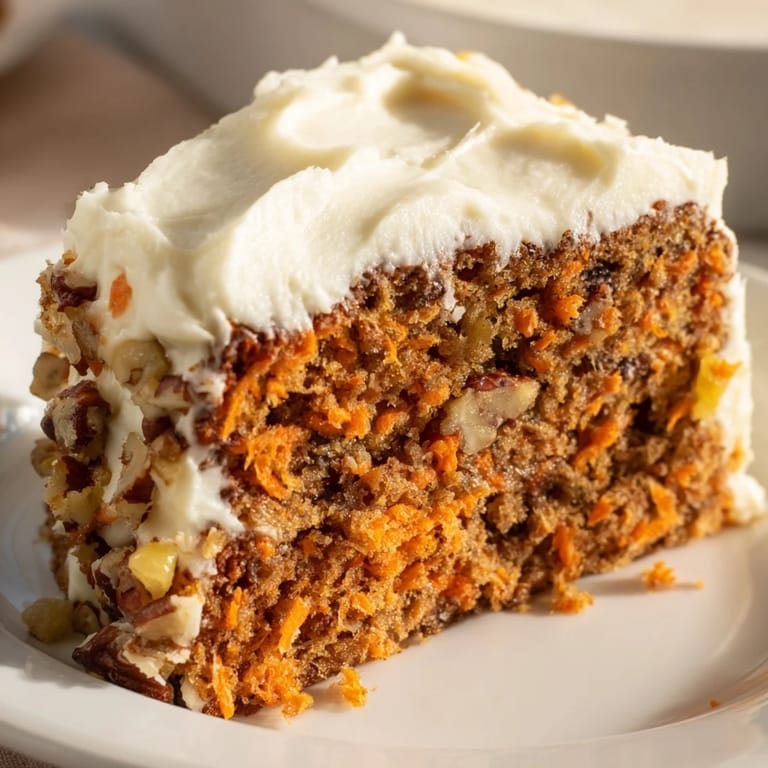
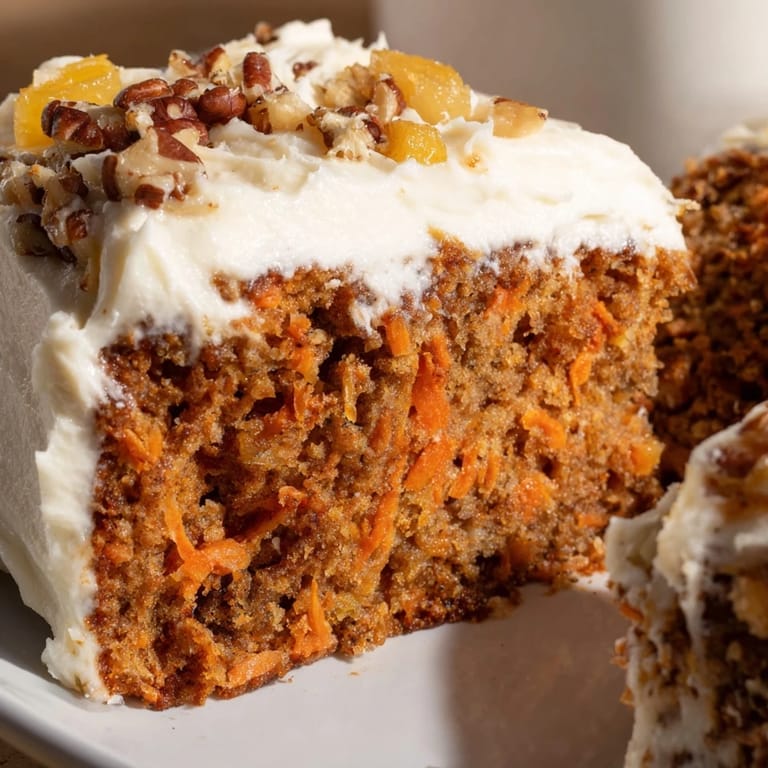
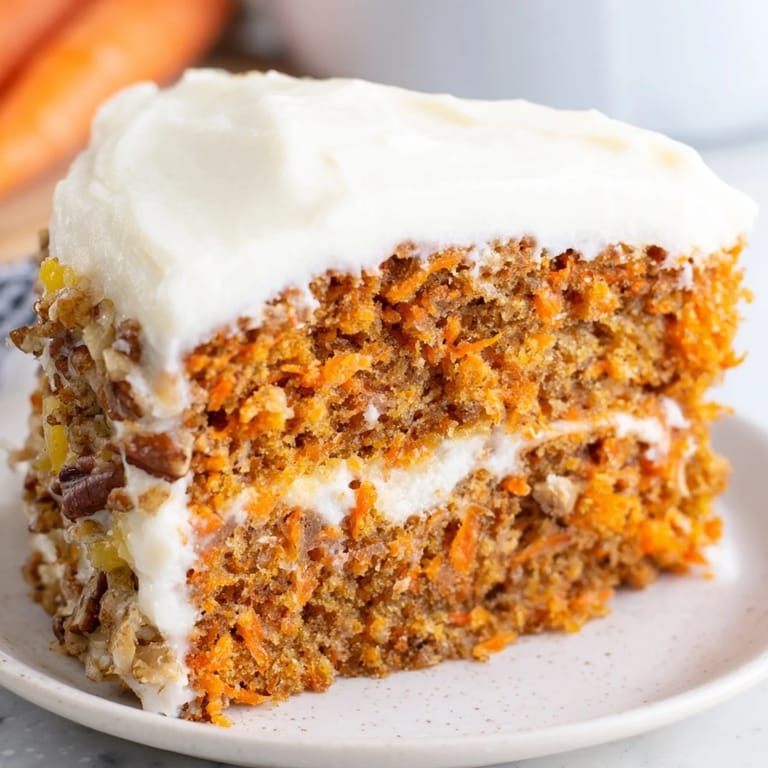
- Place one layer on a serving plate, spread frosting between the layers and over the top and sides with an offset spatula or butter knife. Garnish with toasted nuts or a light shower of grated carrot if you're feeling fancy.
 Pin It
 The real magic happened when my sister brought her daughter over, and my niece asked why this cake was different from the store-bought ones she'd had before. She bit into it and just went quiet—that pure moment of discovery. I realized then that baking isn't about impressing people with technique; it's about creating something that tastes like you took the time to care.
The Spice Balance
Carrot cake lives or dies by its spice blend, and the magic isn't in having more—it's in having the right amount of each. Cinnamon is the lead, nutmeg adds warmth and depth, and ginger comes in just quietly enough to make you pause and wonder what that note is. I've made this cake with too much nutmeg once, and it tasted like cloves hijacked the whole thing, so measure carefully and taste the dry mixture before mixing it into the wet ingredients if you're nervous.
Why Oil, Not Butter
The first carrot cake I made used butter, and I learned within 24 hours why that was a mistake—it had dried out and crumbled like sad clouds. Oil-based cakes stay moist and tender because oil doesn't solidify the way butter does, and it carries moisture throughout the crumb. This isn't fancy baking science; it's just respecting what oil does best.
Frosting and Storage Tips
Make the frosting only after the cakes are completely cool, and if you're making this ahead, frost it the morning you plan to serve it—the cake stays fresh-tasting longer this way, and the frosting has time to set slightly. Store it covered in the refrigerator for up to 5 days, though honestly, it rarely lasts that long.
- A bench scraper or offset spatula makes frosting look intentional and beautiful, even if you're just smearing it on.
- If the frosting seems too soft, chill it for 15 minutes before spreading—it'll cooperate much more gracefully.
- Toast your nuts before adding them to the batter for a deeper, more interesting flavor that transforms the whole cake.
 Pin It
 This cake has become my go-to for moments when I want to say something without words—moving days, new jobs, rough weeks, celebrations. It's simple enough that anyone can make it, but thoughtful enough that it feels special, and that's exactly what I wanted it to be.
Recipe Questions & Answers
- → What spices are used to flavor the cake?
Ground cinnamon, nutmeg, and ginger are blended into the batter to create a warm, spiced flavor.
- → Can I substitute walnuts with another nut?
Yes, pecans can be used instead of walnuts to maintain a similar texture and nutty taste.
- → How should the cake be stored?
Store covered in the refrigerator for up to five days to keep it fresh and moist.
- → What is the purpose of pineapple in the batter?
Crushed pineapple adds moisture and a subtle fruity sweetness, balancing the spiced elements.
- → Is it necessary to toast the nuts before mixing?
Toasting the nuts enhances their flavor and adds a deeper, roasted note to the cake.
- → Can raisins be omitted from the mixture?
Yes, raisins are optional and can be left out if preferred or due to dietary restrictions.