 Pin It
 There's something about the smell of lemon zest hitting a warm skillet that makes me abandon whatever I'm doing. Years ago, my neighbor brought over a pound cake dripping with glaze, and I was hooked—not just by the taste, but by how she described making it as her quiet Sunday ritual. I've been baking this one ever since, and it's become my own version of that same peace. Dense, buttery, with a brightness that cuts through everything, it's the kind of cake that disappears faster than you'd expect.
I made this cake the morning my sister came home after being away for two years, and I remember how the kitchen filled with that sharp, sweet lemon smell right as she walked through the door. She took one bite and just laughed—no words needed. That's when I realized this cake had become part of my vocabulary, something I reach for when I want to say things that are hard to say out loud.
Ingredients
- Unsalted butter (1 cup, softened): The foundation of everything—make sure it's actually soft to the touch, not cold from the fridge, or your cream won't be fluffy.
- Granulated sugar (2 cups): Works with the butter to trap air, so don't skip the creaming step.
- Eggs (4 large, room temperature): Cold eggs won't blend smoothly; let them sit out for 15 minutes if you forgot.
- Whole milk (1/4 cup): Adds tenderness and richness without heaviness.
- Fresh lemon juice (1/4 cup plus 2-3 tablespoons for glaze): Bottled won't give you the same brightness, so squeeze it yourself.
- Lemon zest (2 tablespoons): Use a microplane for fine, delicate shreds that distribute evenly.
- All-purpose flour (2 1/2 cups): Spoon it into your measuring cup and level off; don't pack it down.
- Baking powder (1 teaspoon): Check the date—old baking powder won't give you proper rise.
- Salt (1/2 teaspoon): Enhances the sweetness and balances the lemon.
- Powdered sugar (1 cup, sifted): Sift it to avoid lumpy glaze.
Tired of Takeout? 🥡
Get 10 meals you can make faster than delivery arrives. Seriously.
One email. No spam. Unsubscribe anytime.
Instructions
- Set up and preheat:
- Heat your oven to 350°F and prepare a 9x5-inch loaf pan with grease and flour or parchment paper. This prevents sticking and gives you an even, beautiful crust.
- Cream butter and sugar:
- Beat them together for 3-4 minutes until the mixture is pale and fluffy—you should see it double in volume. This step is where the cake gets its tender crumb.
- Add eggs carefully:
- Drop in one egg at a time, beating well between each one. If you rush this and dump them all in, the batter can look curdled, though it'll still work.
- Prepare the wet and dry mixtures:
- Combine milk, lemon juice, and zest in one bowl. In another, whisk together flour, baking powder, and salt to break up any lumps.
- Alternate and mix gently:
- Add the flour mixture and milk-lemon mixture in three additions, starting and ending with flour. The mixer should be on low—this is when overmixing can make the cake tough.
- Transfer and bake:
- Pour the batter into your pan and smooth the top with a spatula. Bake for 50-55 minutes until a toothpick comes out clean and the cake is golden brown.
- Cool and glaze:
- Let the cake rest in the pan for 10 minutes, then turn it out onto a rack to cool completely. Whisk powdered sugar and lemon juice until smooth, then drizzle generously over the top.
 Pin It
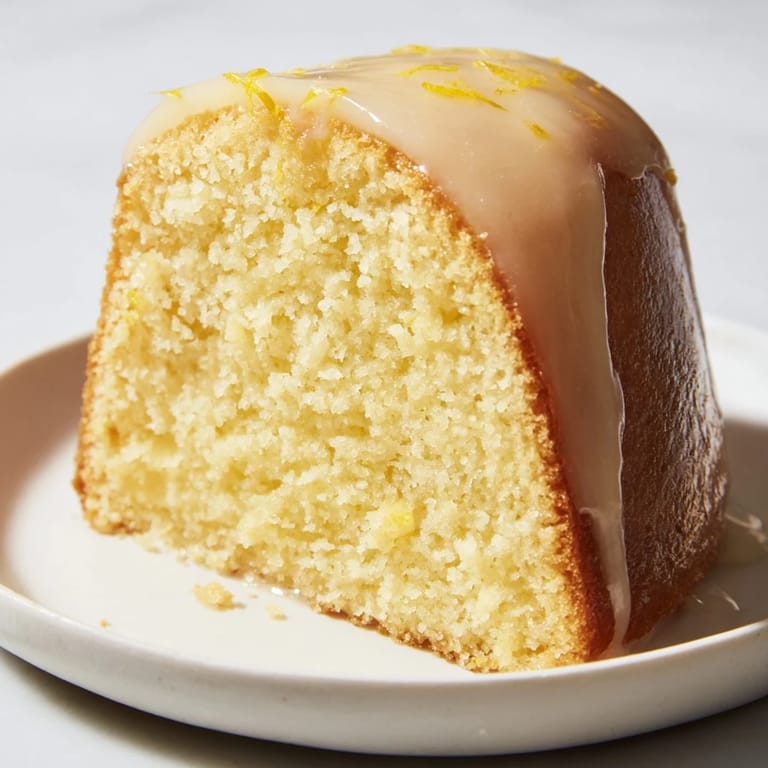
 There's a quiet victory in slicing into a pound cake that's perfectly golden, with that dense, tender crumb intact. I always save the first slice for tasting with a cup of tea, alone in the kitchen before anyone else wakes up—it's become my favorite kind of breakfast.
Keeping It Fresh
Wrapped tightly in plastic wrap or stored in an airtight container, this cake lasts up to three days at room temperature—longer than most cakes, which makes it ideal for baking ahead. I've kept slices in the fridge for snacking, and the flavor actually deepens a bit as it sits, the lemon becoming richer and more integrated with the butter.
Flavor Variations and Additions
If you want to push the lemon even further, add 1/2 teaspoon of lemon extract to the batter, or try stirring a handful of poppy seeds into the dry mixture for texture and subtle nuttiness. Some people brush the warm cake with simple syrup mixed with lemon juice before glazing, which keeps it incredibly moist. You can also dust the glazed cake with a pinch of fine sea salt—it sounds strange but works beautifully to highlight the sweetness and brightness.
Serving and Pairing
This cake stands alone beautifully, but it also plays well with others. Serve it with fresh berries, a dollop of whipped cream, or even a scoop of vanilla ice cream on a warm afternoon. I've even crumbled it over Greek yogurt for breakfast on days when I needed to feel a little fancy, and it pairs wonderfully with Earl Grey or chamomile tea.
- Try layering thin slices with lightly sweetened cream cheese frosting for a more indulgent dessert.
- Toast thick slices and serve with butter if you're feeling particularly generous.
- Keep a slice in your bag for afternoon emergencies—trust me on this one.
 Pin It
 This cake has been my constant through seasons and changes, always ready to become part of whatever moment needs it. Bake it for yourself first, and everything else follows.
Recipe Questions & Answers
- → How do I achieve a moist, dense texture?
Cream the butter and sugar thoroughly until light, and avoid overmixing when adding flour to keep the crumb tender and dense.
- → What is the purpose of lemon zest and juice in the batter?
Lemon zest adds aromatic oils, while fresh lemon juice provides bright, tangy flavor that balances the cake’s richness.
- → Can I substitute butter with another fat?
Butter lends structure and flavor, but high-quality margarine or dairy shortening can be used with slight texture changes.
- → How should I prepare the loaf pan for baking?
Grease and flour the pan or line it with parchment paper to ensure easy removal without sticking.
- → What is the best way to apply the lemon glaze?
Whisk powdered sugar and fresh lemon juice until smooth, then drizzle over the cooled cake to allow the glaze to set.
- → Can this cake be stored after baking?
Wrap tightly and store at room temperature for up to three days to maintain freshness and moisture.