 Pin It
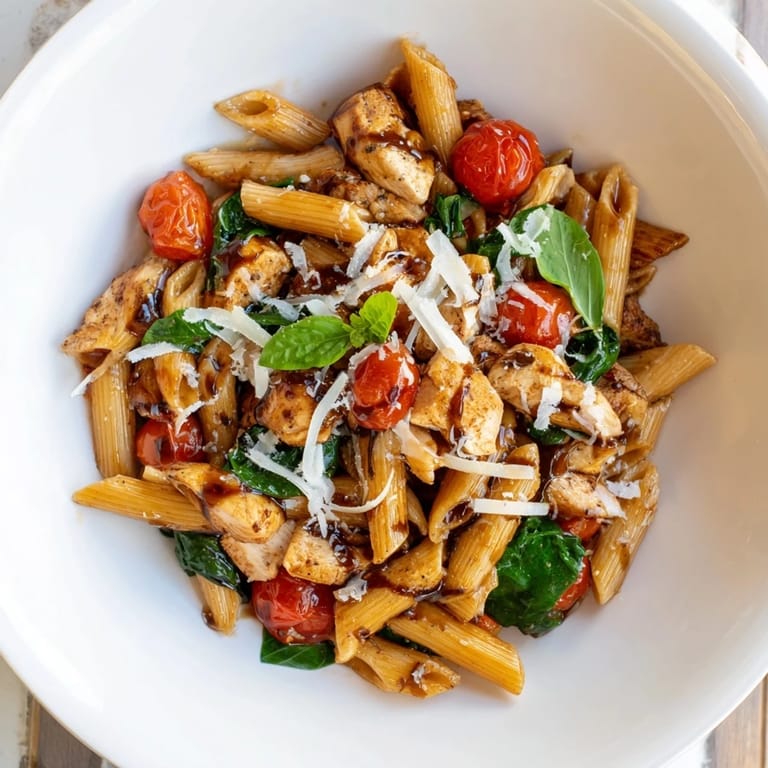
 My kitchen smelled like a trattoria the night I threw this together on a whim, using up a bottle of balsamic vinegar I'd been hoarding for months. I had chicken thawing, pasta in the cupboard, and a craving for something that tasted fancier than the effort I wanted to put in. The glaze bubbled and thickened in the pan, coating the chicken in this glossy, tangy sheen that made me feel like I'd unlocked a secret. It's become my go-to when I want to impress without the stress.
I made this for my sister when she came over exhausted from work, and she sat at my kitchen counter watching me toss everything together. She kept saying it smelled too good to be easy, and when I plated it with a handful of torn basil, she took one bite and asked if I'd been secretly taking cooking classes. I hadn't, but that moment made me realize how a simple glaze can transform everyday ingredients into something that feels like care on a plate.
Ingredients
- Boneless, skinless chicken breasts: Slicing them thin ensures they cook quickly and soak up the glaze without drying out, and I always pound them a bit for even thickness.
- Penne or spaghetti: Penne catches the glaze in its ridges, but spaghetti twirls beautifully with the sauce, so pick based on your mood.
- Garlic: Fresh minced garlic blooms in the oil and perfumes the entire dish, so don't skip this or use jarred if you can help it.
- Cherry tomatoes: They burst and release their sweet juices when heated, creating pockets of brightness against the tangy balsamic.
- Baby spinach: It wilts into the pasta in seconds, adding color and a subtle earthiness without any bitterness.
- Olive oil: Use a good quality one since it's divided throughout the recipe and carries flavor in every layer.
- Balsamic vinegar: The backbone of the glaze, it reduces into a thick, sweet-tart coating that makes everything shine.
- Honey: Balances the acidity of the vinegar and helps the glaze cling to the chicken like a glossy jacket.
- Dijon mustard: Adds a subtle sharpness and helps emulsify the glaze so it doesn't separate.
- Dried Italian herbs: A quick shake brings oregano, basil, and thyme into the mix without needing to chop fresh ones.
- Parmesan cheese: Freshly grated melts slightly into the hot pasta and adds a salty, nutty finish.
- Fresh basil: Torn at the last second, it gives a pop of color and a sweet, peppery aroma that makes the dish feel complete.
Tired of Takeout? 🥡
Get 10 meals you can make faster than delivery arrives. Seriously.
One email. No spam. Unsubscribe anytime.
Instructions
- Boil the pasta:
- Cook your pasta in generously salted water until it still has a slight bite, then scoop out half a cup of that starchy water before draining. That cloudy liquid is gold for bringing the sauce together later.
- Sear the chicken:
- Heat a tablespoon of olive oil until it shimmers, then lay the seasoned chicken strips in without crowding the pan so they get golden edges instead of steaming. Let them sizzle undisturbed for a couple minutes before flipping.
- Sauté the aromatics:
- In the same skillet, add another drizzle of oil and toss in the garlic, stirring constantly so it doesn't burn, then add the tomatoes and let them soften and collapse. The pan will smell incredible at this point.
- Make the glaze:
- Whisk together the balsamic vinegar, honey, mustard, and remaining oil in a small bowl until smooth and glossy. It should look like a thin, pourable syrup.
- Glaze the chicken:
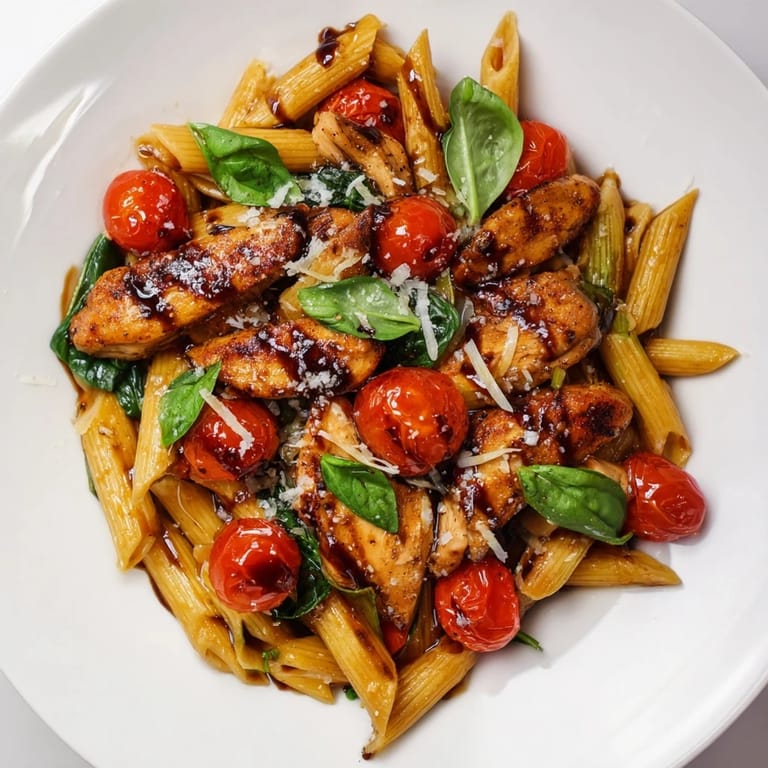
- Return the chicken to the skillet, pour the balsamic mixture over everything, and let it bubble and thicken for a few minutes. The chicken will get coated in this dark, shiny glaze that clings to every piece.
- Toss it all together:
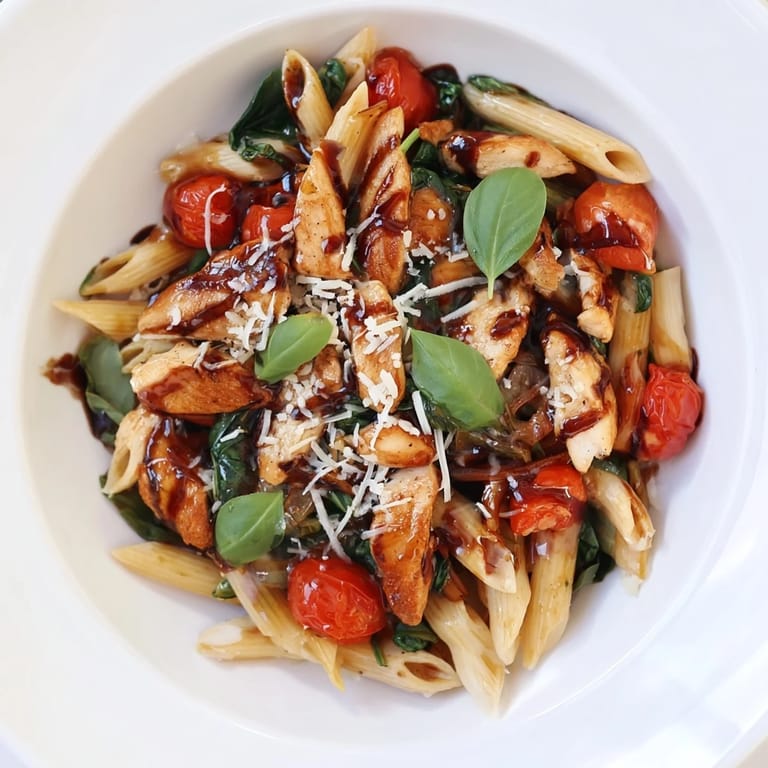
- Add the drained pasta and spinach to the skillet, tossing everything with tongs until the spinach wilts and the pasta is slicked with sauce. Splash in some reserved pasta water to loosen it up if it looks dry.
- Finish and serve:
- Take the pan off the heat, shower it with Parmesan and torn basil, and serve it straight from the skillet if you want. It tastes best when it's still steaming.
 Pin It
 One evening, I served this to a friend who claimed she didn't like balsamic anything, and she scraped her plate clean without saying a word. Later, she texted me asking for the recipe, admitting she'd been wrong about balsamic her whole life. That's when I knew this dish had a quiet magic to it, the kind that changes minds and fills bellies without any fuss.
Choosing Your Pasta Shape
Penne works beautifully here because its tubes trap little pockets of glaze and the ridges grab onto every bit of sauce. Spaghetti, on the other hand, twirls elegantly and lets the chicken and tomatoes shine as toppings rather than mix-ins. I've also used rigatoni when I wanted something heartier, and even farfalle when I was feeling playful. The glaze is forgiving, so pick the shape that makes you happiest to eat.
Making It Your Own
If you want a vegetarian version, swap the chicken for thick slices of portobello mushrooms or pressed tofu, both soak up the glaze like a sponge. I've added sun-dried tomatoes for a deeper, concentrated sweetness, and once I stirred in a handful of toasted pine nuts for crunch. You can also toss in red pepper flakes if you like a little heat cutting through the sweetness. This recipe is a canvas, so paint it however your pantry and cravings lead you.
Storage and Reheating
Leftovers keep well in an airtight container in the fridge for up to three days, though the pasta will soak up some of the sauce as it sits. When reheating, add a splash of water or chicken broth to the pan and warm it gently over medium heat, stirring until it loosens up again. I've even eaten it cold straight from the container for lunch, and it still tastes like a little victory.
- Store the Parmesan and basil separately and add them fresh when serving leftovers.
- Reheat in a skillet rather than the microwave to keep the chicken from getting rubbery.
- If making ahead, undercook the pasta by a minute so it doesn't get mushy when reheated.
 Pin It
 This pasta has earned its spot in my weekly rotation, not because it's complicated, but because it reminds me that good food doesn't need to be fussy. Every time I make it, I'm back in that moment when the glaze first bubbled up and I realized I'd stumbled onto something worth keeping.
Recipe Questions & Answers
- → Can I use chicken thighs instead of breast?
Absolutely. Chicken thighs work wonderfully and stay juicy. They may need an extra 2-3 minutes cooking time due to thickness. Cut into similar-sized pieces for even cooking.
- → How do I prevent the balsamic glaze from becoming too acidic?
The honey in the glaze balances the acidity beautifully. If you prefer it sweeter, add an extra half teaspoon of honey. Simmering the sauce for 2-3 minutes also mellows the vinegar's sharpness.
- → What pasta shape works best?
Penne and spaghetti both work great. Penne catches the sauce in its tubes, while spaghetti creates elegant strands. Any medium pasta shape will work equally well.
- → Can I make this ahead?
Prepare components separately ahead of time—cook pasta, marinate chicken, and make the glaze. Combine everything just before serving for best texture and flavor.
- → What wine pairs best with this dish?
Light Pinot Noir complements the balsamic beautifully, while crisp Sauvignon Blanc brightens the rich glaze. Both enhance the garlic and tomato notes.
- → Is this suitable for dietary restrictions?
Yes. Use gluten-free pasta for gluten sensitivity and dairy-free Parmesan for dairy restrictions. For vegetarian, substitute chicken with sautéed mushrooms or firm tofu cooked the same way.